1R66 | pdb_00001r66

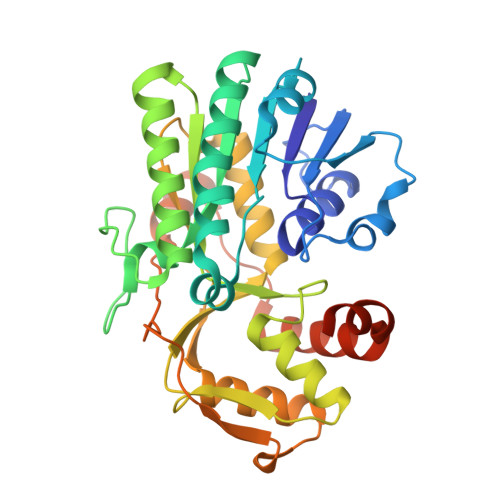
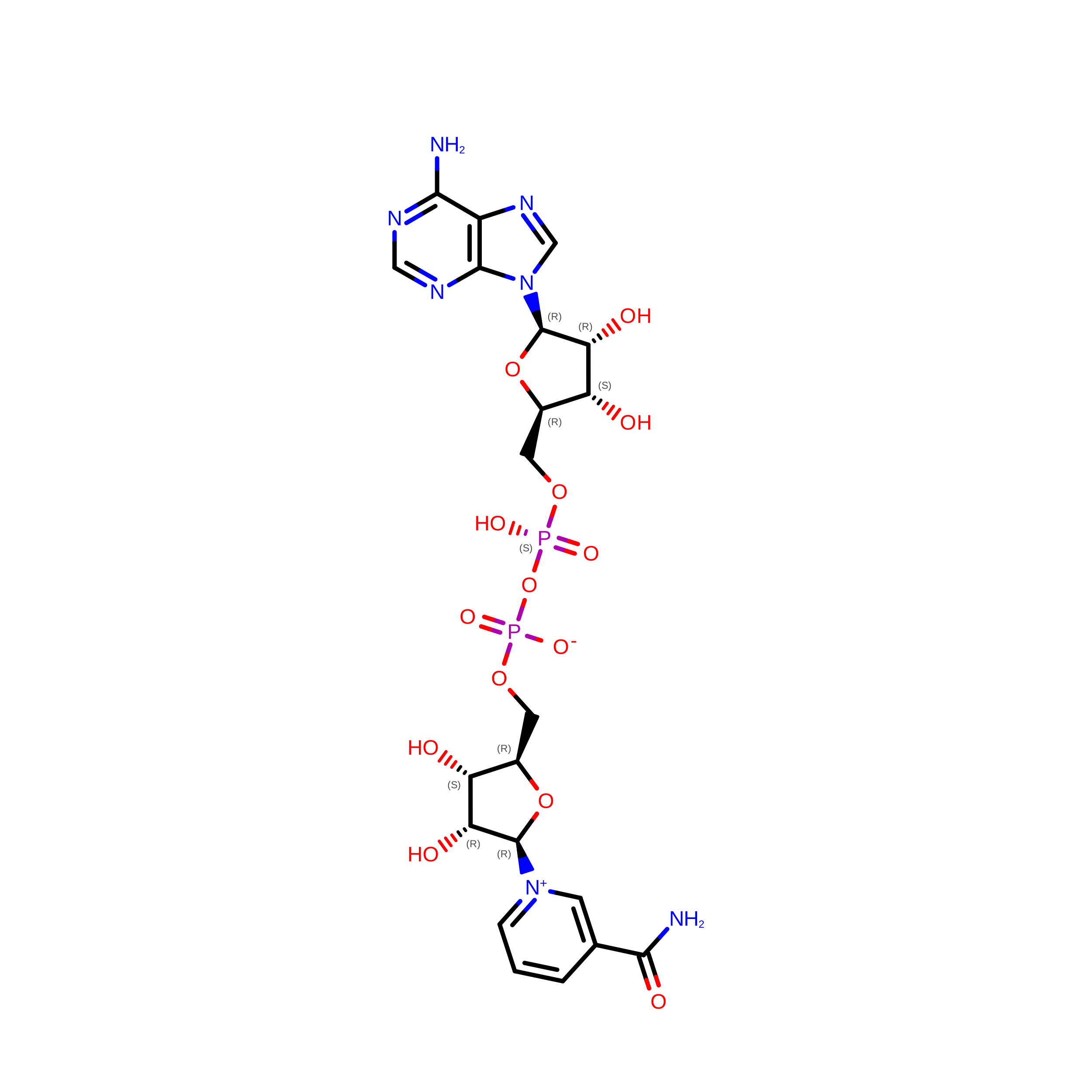
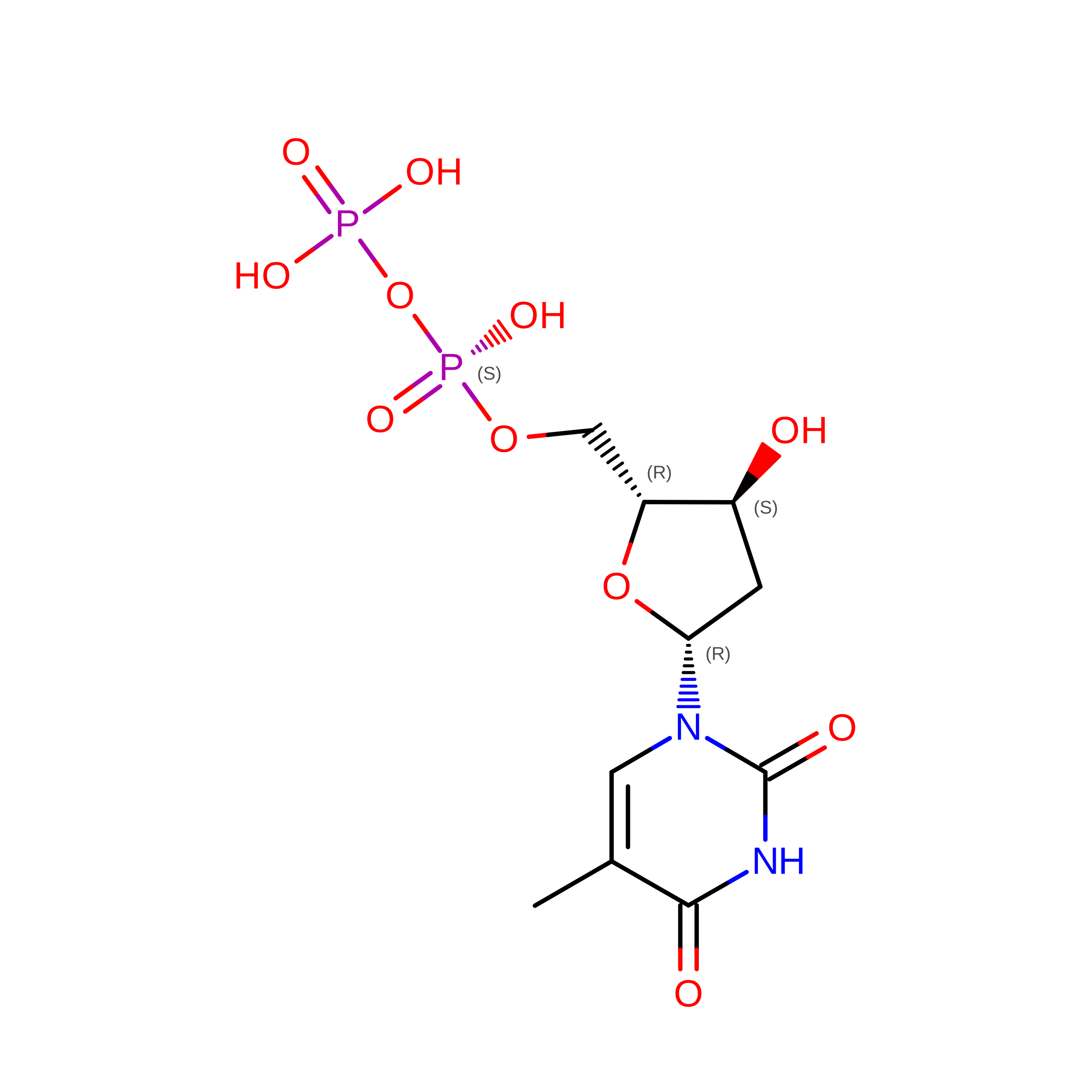
Crystal Structure of DesIV (dTDP-glucose 4,6-dehydratase) from Streptomyces venezuelae with NAD and TYD bound


Experimental Data Snapshot

  • Method: X-RAY DIFFRACTION
  • Resolution: 1.44 Å
  • R-Value Free: 
    0.231 (Depositor) 
  • R-Value Work: 
    0.176 (Depositor), 0.302 (DCC) 

Starting Model: experimental
View more details

wwPDB Validation 3D Report Full Report

Validation slider image for 1R66

Ligand Structure Quality Assessment 


This is version 1.4 of the entry. See complete history

Literature

High Resolution X-ray Structure of dTDP-Glucose 4,6-Dehydratase from Streptomyces venezuelae

Allard, S.T.M.Cleland, W.W.Holden, H.M.

(2004) J Biological Chem 279: 2211-2220

  • DOI: https://doi.org/10.1074/jbc.M310134200
  • Primary Citation Related Structures: 
    1R66, 1R6D

  • PubMed Abstract: 

    Desosamine is a 3-(dimethylamino)-3,4,6-trideoxyhexose found in some macrolide antibiotics. In Streptomyces venezuelae, there are seven genes required for the biosynthesis of this unusual sugar. One of the genes, desIV, codes for a dTDP-glucose 4,6-dehydratase, which is referred to as DesIV. The reaction mechanisms for these types of dehydratases are quite complicated with proton abstraction from the sugar 4'-hydroxyl group and hydride transfer to NAD+, proton abstraction at C-5, and elimination of the hydroxyl group at C-6 of the sugar, and finally return of a proton to C-5 and a hydride from NADH to C-6. Here we describe the cloning, overexpression, and purification, and high resolution x-ray crystallographic analysis to 1.44 A of wild-type DesIV complexed with dTDP. Additionally, for this study, a double site-directed mutant protein (D128N/E129Q) was prepared, crystallized as a complex with NAD+ and the substrate dTDP-glucose and its structure determined to 1.35 A resolution. In DesIV, the phenolate group of Tyr(151) and O(gamma) of Thr(127) lie at 2.7 and 2.6 A, respectively from the 4'-hydroxyl group of the dTDP-glucose substrate. The side chain of Asp(128) is in the correct position to function as a general acid for proton donation to the 6'-hydroxyl group while the side chain of Glu(129) is ideally situated to serve as the general base for proton abstraction at C-5. This investigation provides further detailed information for understanding the exquisite chemistry that occurs in these remarkable enzymes.


  • Organizational Affiliation
    • Department of Biochemistry, University of Wisconsin, Madison, WI 53706, USA.

Macromolecule Content 

  • Total Structure Weight: 37.6 kDa 
  • Atom Count: 2,835 
  • Modeled Residue Count: 322 
  • Deposited Residue Count: 337 
  • Unique protein chains: 1

Macromolecules

Find similar proteins by:|  3D Structure
Entity ID: 1
MoleculeChains  Sequence LengthOrganismDetailsImage
TDP-glucose-4,6-dehydratase337Streptomyces venezuelaeMutation(s): 0 
Gene Names: DesIV
EC: 4.2.1.46
UniProt
Find proteins for Q9ZGH3 (Streptomyces venezuelae)
Explore Q9ZGH3 
Go to UniProtKB:  Q9ZGH3
Entity Groups
Sequence Clusters30% Identity50% Identity70% Identity90% Identity95% Identity100% Identity
UniProt GroupQ9ZGH3
Sequence Annotations
Expand
Reference Sequence

Experimental Data & Validation

Experimental Data

  • Method: X-RAY DIFFRACTION
  • Resolution: 1.44 Å
  • R-Value Free:  0.231 (Depositor) 
  • R-Value Work:  0.176 (Depositor), 0.302 (DCC) 
Space Group: P 21 21 2
Unit Cell:
Length ( Å )Angle ( ˚ )
a = 75.501α = 90
b = 99.799β = 90
c = 42.187γ = 90
Software Package:
Software NamePurpose
HKL-2000data collection
SCALEPACKdata scaling
AMoREphasing
TNTrefinement
HKL-2000data reduction

Structure Validation

View Full Validation Report


Ligand Structure Quality Assessment 


Entry History 

Deposition Data

Revision History  (Full details and data files)

  • Version 1.0: 2004-01-27
    Type: Initial release
  • Version 1.1: 2008-04-29
    Changes: Version format compliance
  • Version 1.2: 2011-07-13
    Changes: Derived calculations, Version format compliance
  • Version 1.3: 2020-07-15
    Changes: Advisory, Data collection, Database references, Derived calculations
  • Version 1.4: 2023-08-23
    Changes: Data collection, Database references, Derived calculations, Refinement description