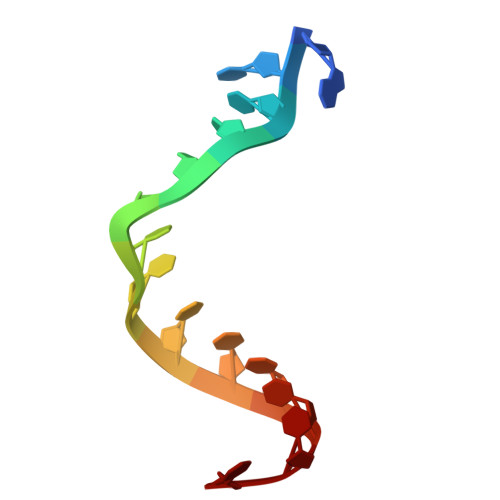
31LF | pdb_000031lf

HRV virion E2250A mutant


Experimental Data Snapshot

  • Method: ELECTRON MICROSCOPY
  • Resolution: 2.71 Å
  • Aggregation State: PARTICLE 
  • Reconstruction Method: SINGLE PARTICLE 

Starting Model: experimental
View more details

wwPDB Validation 3D Report Full Report

Validation slider image for 31LF

This is version 1.1 of the entry. See complete history

Literature

RNA-repelling Anionic Clusters in Human Rhinovirus Cooperate with Cationic Residues to Promote Virion Assembly and Restrain RNA Release.

Riomoros-Barahona, V.Martinez-Romero, J.M.Valiente, L.McGrail, J.P.Gil-Redondo, J.C.Valbuena, A.Caston, J.R.Mateu, M.G.

(2026) J Mol Biol : 169998-169998

  • DOI: https://doi.org/10.1016/j.jmb.2026.169998
  • Primary Citation Related Structures: 
    31LE, 31LF

  • PubMed Abstract: 

    Research on virus nucleic acid-protein interactions is important to understand infection and guide antiviral drug design. In previous studies we showed that the human rhinovirus (RV) genomic RNA is organized as a dodecahedral cage formed by 30 RNA duplex elements anchored to capsid concavities. We showed also that capsid-RNA duplex interactions include conserved tryptophans, neutral polar residues, and many positively charged residues that promote virion assembly and restrain RNA release by stabilizing the negatively charged RNA duplex structure. The present study expands our understanding of the capsid-RNA duplex interface in RV by addressing the structural and functional roles of conserved patches of negatively charged capsid residues interposed between each RNA duplex and its binding site at the capsid inner surface. The initial hypothesis was that electrostatic repulsion between anionic residues and RNA phosphates would lead to functional effects opposite to those previously found for cationic residues that can electrostatically attract RNA phosphates. In fact, those anionic residues do not oppose, but act together with cationic residues at the RNA duplex binding sites to promote virion assembly and restrain RNA release. Cryogenic electron microscopy analysis showed that negatively charged residues at the capsid-RNA duplex interfaces have a different structural role than positively charged residues, even though they all play similar functional roles. A tentative model is discussed to explain the functional effects of the complex distribution of negative and positive electrostatic potential found at capsid-RNA duplex interfaces in RV.


  • Organizational Affiliation
    • Centro de Biología Molecular Severo Ochoa (CSIC-UAM), Universidad Autónoma de Madrid 28049 Madrid, Spain.

Macromolecule Content 

  • Total Structure Weight: 95.29 kDa 
  • Atom Count: 6,682 
  • Modeled Residue Count: 835 
  • Deposited Residue Count: 835 
  • Unique protein chains: 4
  • Unique nucleic acid chains: 1

Macromolecules


Find similar proteins by:|  3D Structure
Entity ID: 1
MoleculeChains  Sequence LengthOrganismDetailsImage
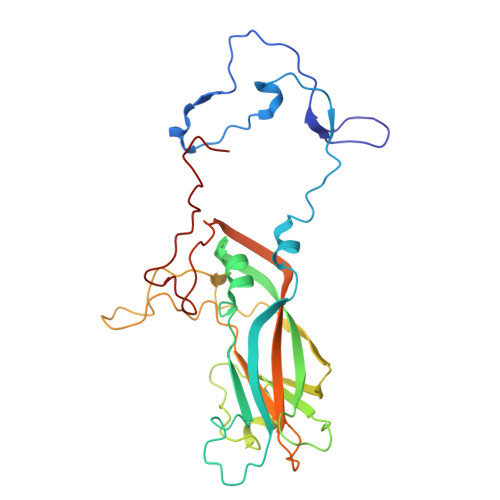
Capsid protein VP1A [auth 1]282rhinovirus B14Mutation(s): 0 
UniProt
Find proteins for P03303 (Human rhinovirus 14)
Explore P03303 
Go to UniProtKB:  P03303
Entity Groups
Sequence Clusters30% Identity50% Identity70% Identity90% Identity95% Identity100% Identity
UniProt GroupP03303
Sequence Annotations
Expand
Reference Sequence
Find similar proteins by:|  3D Structure
Entity ID: 2
MoleculeChains  Sequence LengthOrganismDetailsImage
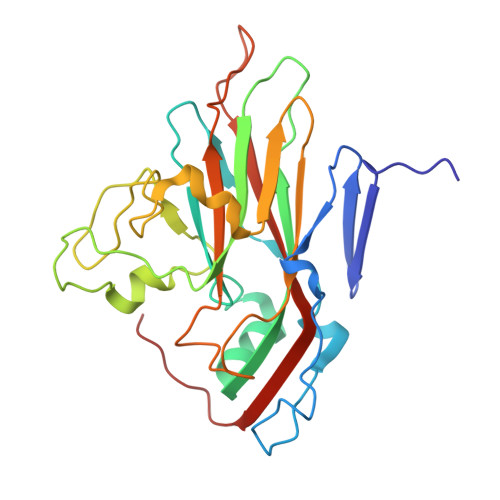
Genome polyproteinB [auth 2]256rhinovirus B14Mutation(s): 1 
Entity Groups
Sequence Clusters30% Identity50% Identity70% Identity90% Identity95% Identity100% Identity
Sequence Annotations
Expand
Reference Sequence
Find similar proteins by:|  3D Structure
Entity ID: 3
MoleculeChains  Sequence LengthOrganismDetailsImage
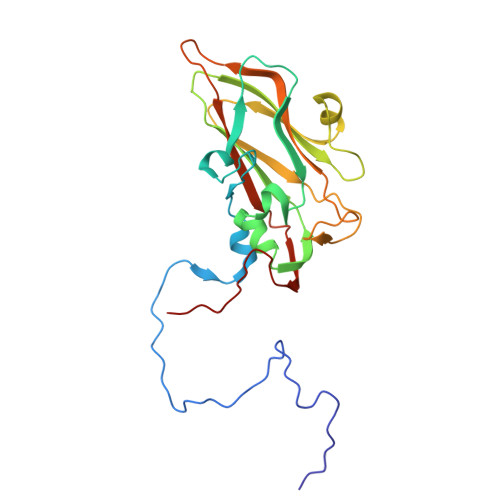
Capsid protein VP3C [auth 3]236rhinovirus B14Mutation(s): 0 
UniProt
Find proteins for P03303 (Human rhinovirus 14)
Explore P03303 
Go to UniProtKB:  P03303
Entity Groups
Sequence Clusters30% Identity50% Identity70% Identity90% Identity95% Identity100% Identity
UniProt GroupP03303
Sequence Annotations
Expand
Reference Sequence
Find similar proteins by:|  3D Structure
Entity ID: 4
MoleculeChains  Sequence LengthOrganismDetailsImage
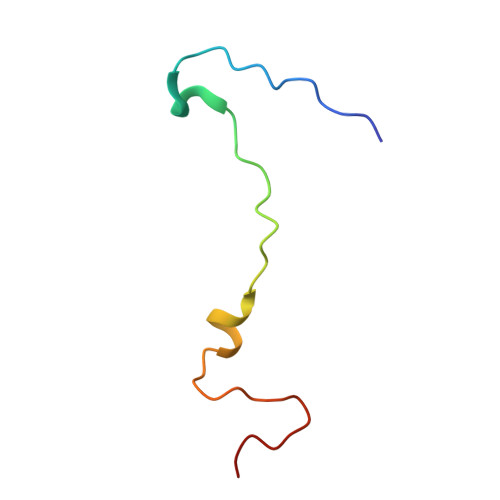
Capsid protein VP4D [auth 4]47rhinovirus B14Mutation(s): 0 
UniProt
Find proteins for P03303 (Human rhinovirus 14)
Explore P03303 
Go to UniProtKB:  P03303
Entity Groups
Sequence Clusters30% Identity50% Identity70% Identity90% Identity95% Identity100% Identity
UniProt GroupP03303
Sequence Annotations
Expand
Reference Sequence
Find similar nucleic acids by:  Sequence
Entity ID: 5
MoleculeChains LengthOrganismImage
RNA (5'-R(P*AP*UP*UP*UP*UP*UP*UP*UP*UP*UP*UP*UP*UP*U)-3')E [auth 5]14rhinovirus B14
Sequence Annotations
Expand
Reference Sequence

Experimental Data & Validation

Experimental Data

  • Method: ELECTRON MICROSCOPY
  • Resolution: 2.71 Å
  • Aggregation State: PARTICLE 
  • Reconstruction Method: SINGLE PARTICLE 
EM Software:
TaskSoftware PackageVersion
RECONSTRUCTIONcryoSPARC

Structure Validation

View Full Validation Report


Entry History 

& Funding Information

Deposition Data


Funding OrganizationLocationGrant Number
Spanish Ministry of Science, Innovation, and UniversitiesSpain--

Revision History  (Full details and data files)

  • Version 1.0: 2026-09-09
    Type: Initial release
  • Version 1.1: 2026-09-16
    Changes: Data collection, Database references