4N1Z | pdb_00004n1z

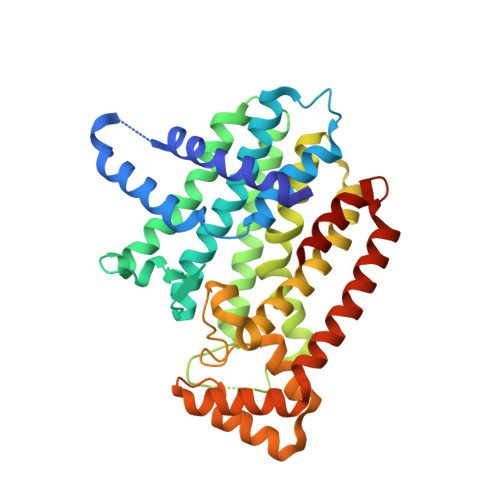
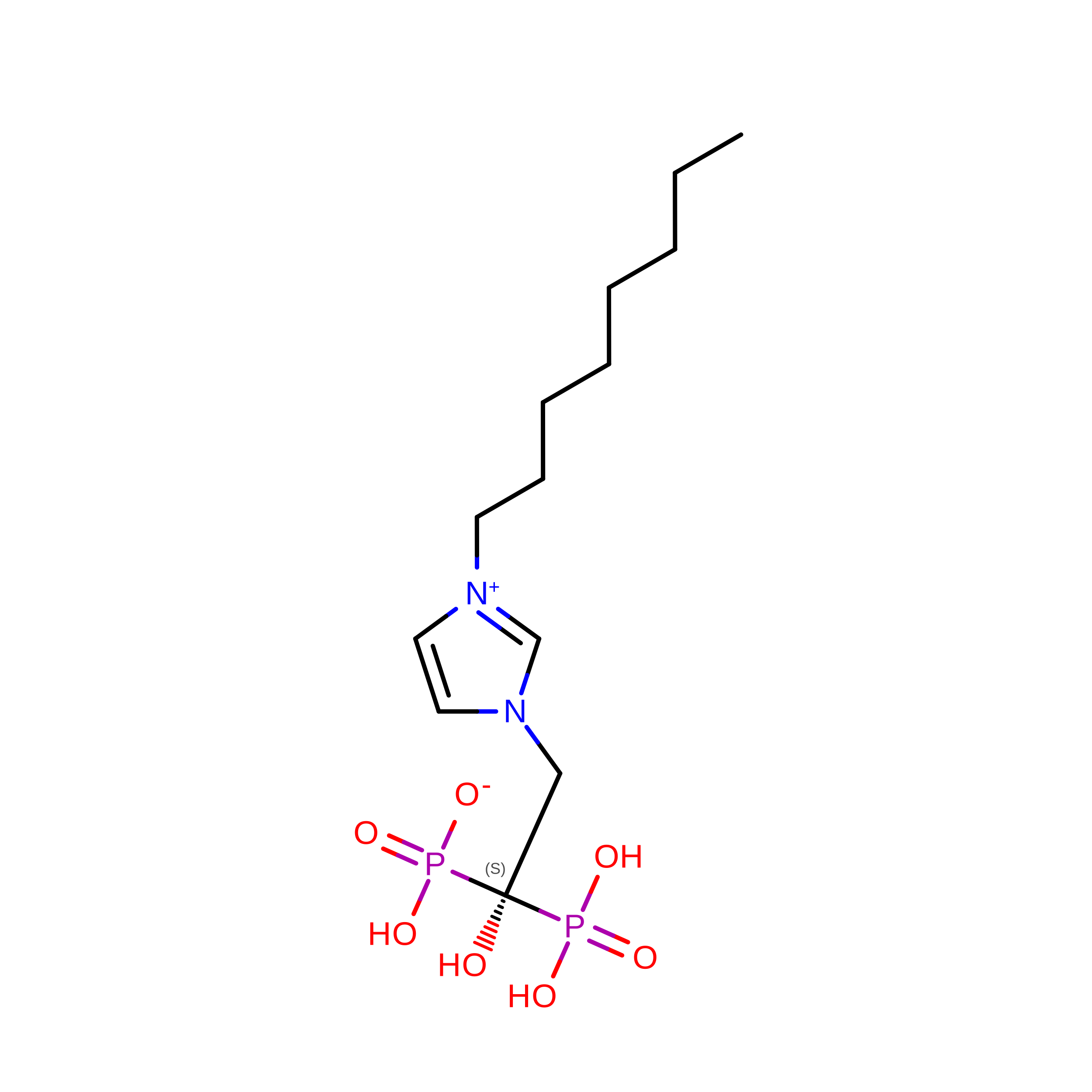
Crystal Structure of Human Farnesyl Diphosphate Synthase in Complex with BPH-1222


Experimental Data Snapshot

  • Method: X-RAY DIFFRACTION
  • Resolution: 2.35 Å
  • R-Value Free: 
    0.265 (Depositor), 0.265 (DCC) 
  • R-Value Work: 
    0.203 (Depositor), 0.202 (DCC) 
  • R-Value Observed: 
    0.206 (Depositor) 

Starting Model: experimental
View more details

wwPDB Validation 3D Report Full Report

Validation slider image for 4N1Z

Ligand Structure Quality Assessment 


This is version 1.1 of the entry. See complete history. 

Literature

A combination therapy for KRAS-driven lung adenocarcinomas using lipophilic bisphosphonates and rapamycin.

Xia, Y., Liu, Y.L., Xie, Y., Zhu, W., Guerra, F., Shen, S., Yeddula, N., Fischer, W., Low, W., Zhou, X., Zhang, Y., Oldfield, E., Verma, I.M.

(2014) Sci Transl Med 6: 263ra161-263ra161

  • DOI: https://doi.org/10.1126/scitranslmed.3010382
  • Primary Citation Related Structures: 
    4N1Z

  • PubMed Abstract: 

    Lung cancer is the most common human malignancy and leads to about one-third of all cancer-related deaths. Lung adenocarcinomas harboring KRAS mutations, in contrast to those with EGFR and EML4-ALK mutations, have not been successfully targeted. We describe a combination therapy for treating these malignancies with two agents: a lipophilic bisphosphonate and rapamycin. This drug combination is much more effective than either agent acting alone in the KRAS G12D-induced mouse lung model. Lipophilic bisphosphonates inhibit both farnesyl and geranylgeranyldiphosphate synthases, effectively blocking prenylation of KRAS and other small G proteins (heterotrimeric GTP-binding protein, heterotrimeric guanine nucleotide-binding proteins) critical for tumor growth and cell survival. Bisphosphonate treatment of cells initiated autophagy but was ultimately unsuccessful and led to p62 accumulation and concomitant nuclear factor κB (NF-κB) activation, resulting in dampened efficacy in vivo. However, we found that rapamycin, in addition to inhibiting the mammalian target of rapamycin (mTOR) pathway, facilitated autophagy and prevented p62 accumulation-induced NF-κB activation and tumor cell proliferation. Overall, these results suggest that using lipophilic bisphosphonates in combination with rapamycin may provide an effective strategy for targeting lung adenocarcinomas harboring KRAS mutations.


  • Organizational Affiliation: 
    • Laboratory of Genetics, Salk Institute for Biological Studies, La Jolla, CA 92037, USA.

Macromolecule Content 

  • Total Structure Weight: 40.68 kDa 
  • Atom Count: 2,786 
  • Modeled Residue Count: 333 
  • Deposited Residue Count: 348 
  • Unique protein chains: 1

Macromolecules

Find similar proteins by:|  3D Structure
Entity ID: 1
MoleculeChains  Sequence LengthOrganismDetailsImage
Farnesyl pyrophosphate synthaseA [auth F]348Homo sapiensMutation(s): 0 
Gene Names: FDPS, FPS, KIAA1293
EC: 2.5.1.10 (PDB Primary Data), 2.5.1.1 (PDB Primary Data)
UniProt & NIH Common Fund Data Resources
Find proteins for P14324 (Homo sapiens)
Explore P14324 
Go to UniProtKB:  P14324
PHAROS:  P14324
GTEx:  ENSG00000160752 
Entity Groups
Sequence Clusters30% Identity50% Identity70% Identity90% Identity95% Identity100% Identity
UniProt GroupP14324
Sequence Annotations
Expand
Reference Sequence

Experimental Data & Validation

Experimental Data

  • Method: X-RAY DIFFRACTION
  • Resolution: 2.35 Å
  • R-Value Free:  0.265 (Depositor), 0.265 (DCC) 
  • R-Value Work:  0.203 (Depositor), 0.202 (DCC) 
  • R-Value Observed: 0.206 (Depositor) 
Space Group: P 41 21 2
Unit Cell:
Length ( Å )Angle ( ˚ )
a = 111.946α = 90
b = 111.946β = 90
c = 67.284γ = 90
Software Package:
Software NamePurpose
REFMACrefinement
PDB_EXTRACTdata extraction
HKL-3000data collection
HKL-3000data reduction
HKL-3000data scaling
PHASESphasing

Structure Validation

View Full Validation Report


Ligand Structure Quality Assessment 


Entry History 

Deposition Data

Revision History  (Full details and data files)

  • Version 1.0: 2014-12-10
    Type: Initial release
  • Version 1.1: 2023-09-20
    Changes: Data collection, Database references, Derived calculations, Refinement description