7F9H | pdb_00007f9h

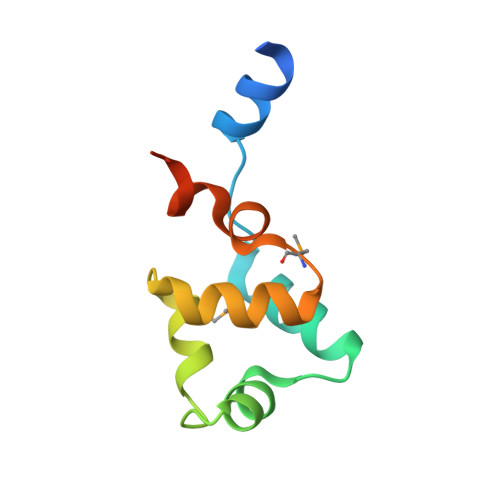
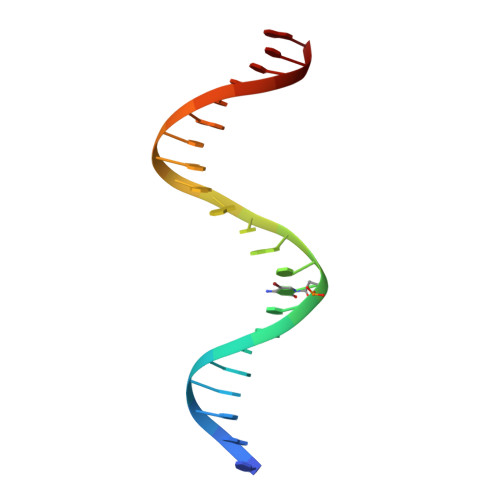
complex structure of EnrR-DNA


Experimental Data Snapshot

  • Method: X-RAY DIFFRACTION
  • Resolution: 1.78 Å
  • R-Value Free: 
    0.222 (Depositor), 0.227 (DCC) 
  • R-Value Work: 
    0.201 (Depositor) 
  • R-Value Observed: 
    0.202 (Depositor) 

wwPDB Validation 3D Report Full Report

Validation slider image for 7F9H

This is version 1.2 of the entry. See complete history. 

Literature

Xenogeneic nucleoid-associated EnrR thwarts H-NS silencing of bacterial virulence with unique DNA binding.

Ma, R., Liu, Y., Gan, J., Qiao, H., Ma, J., Zhang, Y., Bu, Y., Shao, S., Zhang, Y., Wang, Q.

(2022) Nucleic Acids Res 50: 3777-3798

  • DOI: https://doi.org/10.1093/nar/gkac180
  • Primary Citation Related Structures: 
    7F9H, 7F9I

  • PubMed Abstract: 

    Type III and type VI secretion systems (T3/T6SS) are encoded in horizontally acquired genomic islands (GIs) that play crucial roles in evolution and virulence in bacterial pathogens. T3/T6SS expression is subjected to tight control by the host xenogeneic silencer H-NS, but how this mechanism is counteracted remains to be illuminated. Here, we report that xenogeneic nucleoid-associated protein EnrR encoded in a GI is essential for virulence in pathogenic bacteria Edwardsiella and Salmonella. We showed that EnrR plays critical roles in T3/T6SS expression in these bacteria. Various biochemical and genetic analyses demonstrated that EnrR binds and derepresses the promoter of esrB, the critical regulator of T3/T6SS, to promote their expression by competing with H-NS. Additionally, EnrR targets AT-rich regions, globally modulates the expression of ∼363 genes and is involved in various cellular processes. Crystal structures of EnrR in complex with a specific AT-rich palindromic DNA revealed a new DNA-binding mode that involves conserved HTH-mediated interactions with the major groove and contacts of its N-terminal extension to the minor groove in the symmetry-related duplex. Collectively, these data demonstrate that EnrR is a virulence activator that can antagonize H-NS, highlighting a unique mechanism by which bacterial xenogeneic regulators recognize and regulate foreign DNA.


  • Organizational Affiliation: 
    • State Key Laboratory of Bioreactor Engineering, East China University of Science and Technology, Shanghai 200237, China.

Macromolecule Content 

  • Total Structure Weight: 34.4 kDa 
  • Atom Count: 2,289 
  • Modeled Residue Count: 188 
  • Deposited Residue Count: 224 
  • Unique protein chains: 1
  • Unique nucleic acid chains: 1

Macromolecules


Find similar proteins by:|  3D Structure
Entity ID: 1
MoleculeChains  Sequence LengthOrganismDetailsImage
EnrR repressor
A, B
90Edwardsiella piscicidaMutation(s): 0 
UniProt
Find proteins for A0AAQ3C0I8 (Edwardsiella piscicida)
Explore A0AAQ3C0I8 
Go to UniProtKB:  A0AAQ3C0I8
Entity Groups
Sequence Clusters30% Identity50% Identity70% Identity90% Identity95% Identity100% Identity
UniProt GroupA0AAQ3C0I8
Sequence Annotations
Expand
Reference Sequence
Find similar nucleic acids by:  Sequence
Entity ID: 2
MoleculeChains LengthOrganismImage
target DNA
C, D
22synthetic construct
Sequence Annotations
Expand
Reference Sequence

Small Molecules

Modified Residues  1 Unique
IDChains TypeFormula2D DiagramParent
MSE
Query on MSE
A, B
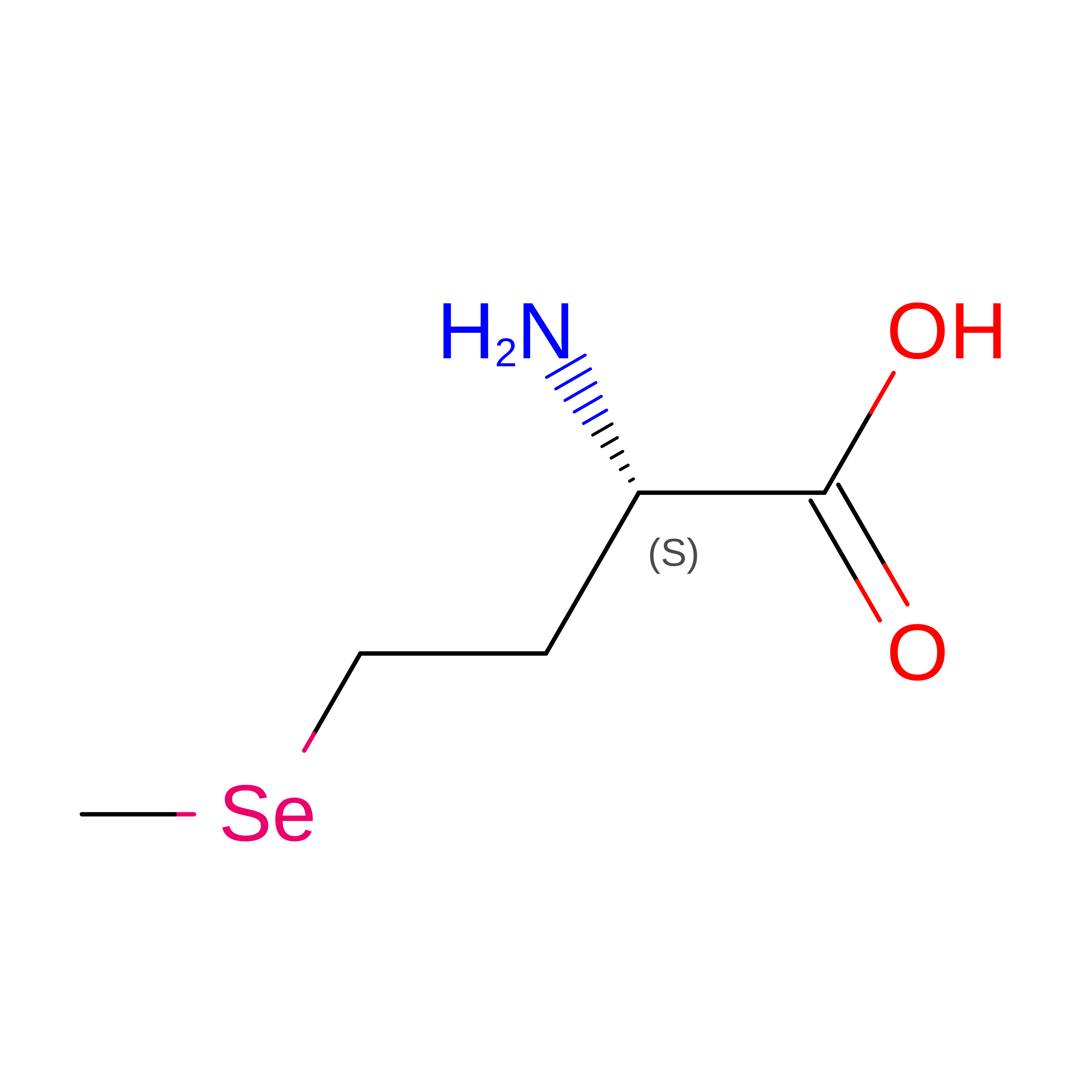
L-PEPTIDE LINKINGC5 H11 N O2 SeMET

Experimental Data & Validation

Experimental Data

  • Method: X-RAY DIFFRACTION
  • Resolution: 1.78 Å
  • R-Value Free:  0.222 (Depositor), 0.227 (DCC) 
  • R-Value Work:  0.201 (Depositor) 
  • R-Value Observed: 0.202 (Depositor) 
Space Group: C 1 2 1
Unit Cell:
Length ( Å )Angle ( ˚ )
a = 104.228α = 90
b = 58.49β = 98.37
c = 67.569γ = 90
Software Package:
Software NamePurpose
HKL-2000data scaling
REFMACrefinement
PDB_EXTRACTdata extraction
HKL-2000data reduction
AutoSolphasing

Structure Validation

View Full Validation Report


Entry History 

Deposition Data

Revision History  (Full details and data files)

  • Version 1.0: 2022-05-11
    Type: Initial release
  • Version 1.1: 2022-05-18
    Changes: Derived calculations
  • Version 1.2: 2024-11-13
    Changes: Data collection, Structure summary