Download Mendeley
A Small-Molecule Inhibitor of Factor Inhibiting HIF Binding to a Tyrosine-Flip Pocket for the Treatment of Obesity.
Wu, Y., Chen, Y., Corner, T.P., Nakashima, Y., Salah, E., Li, Z., Zhang, L., Yang, L., Tumber, A., Sun, Z., Wen, Y., Zhong, A., Yang, F., Li, X., Zhang, Z., Schofield, C.J., Zhang, X.(2024) Angew Chem Int Ed Engl 63: e202410438-e202410438
- PubMed: 38923188 Search on PubMed
- DOI: https://doi.org/10.1002/anie.202410438
- Primary Citation Related Structures:
8IHZ, 8II0 - PubMed Abstract:
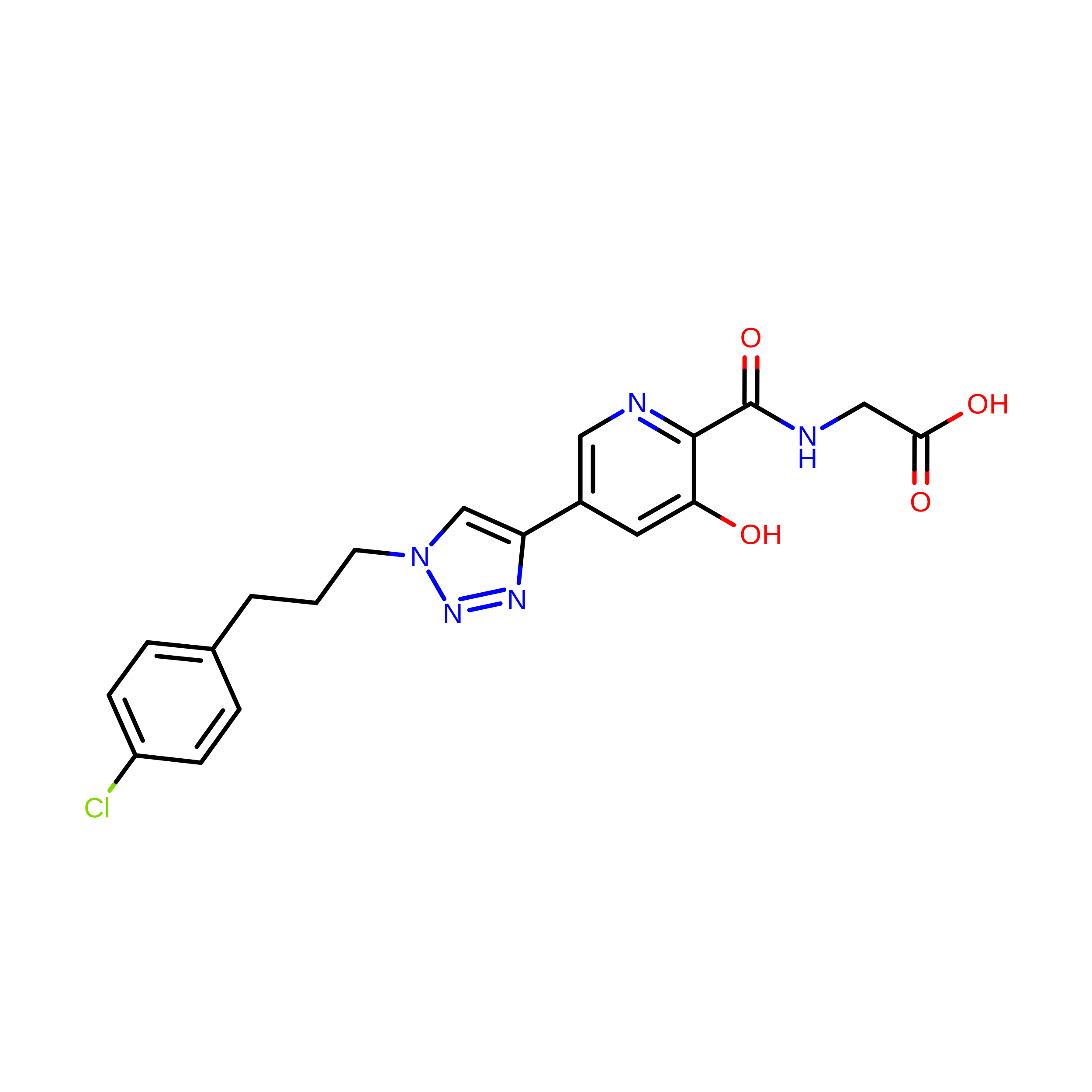
In animals, limiting oxygen upregulates the hypoxia-inducible factor (HIF) and promotes a metabolic shift towards glycolysis. Factor inhibiting HIF (FIH) is an asparaginyl hydroxylase that regulates HIF function by reducing its interaction with histone acetyl transferases. HIF levels are negatively regulated by the HIF prolyl hydroxylases (PHDs) which, like FIH, are 2-oxoglutarate (2OG) oxygenases. Genetic loss of FIH promotes both glycolysis and aerobic metabolism. FIH has multiple non-HIF substrates making it challenging to connect its biochemistry with physiology. A structure-mechanism guided approach identified a highly potent in vivo active FIH inhibitor, ZG-2291, the binding of which promotes a conformational flip of a catalytically important tyrosine, enabling the selective inhibition of FIH over other Jumonji C subfamily 2OG oxygenases. Consistent with genetic studies, ZG-2291 promotes thermogenesis and ameliorates symptoms of obesity and metabolic dysfunction in ob/ob mice. The results reveal ZG-2291 as a useful probe for the physiological functions of FIH and identify FIH inhibition as a promising strategy for obesity treatment.
- State Key Laboratory of Natural Medicines, Jiangsu Key Laboratory of Drug Design and Optimization, and Department of Chemistry, China Pharmaceutical University, Nanjing, 211198, China.
Organizational Affiliation: