Download Mendeley
Convergent evolution of antibiotic resistance mechanisms between pyrrolobenzodiazepines and albicidin in multidrug resistant Klebsiella pneumoniae.
Surani, Y.M., Wand, M.E., Picconi, P., Di Palma, M., Zenezini Chiozzi, R., Hasan, M.M., Andriollo, P., Gratz, S., Nahar, K.S., Maynard-Smith, M., Sussmuth, R.D., Steiner, R.A., Rahman, K.M., Hind, C.K., Sutton, J.M.(2025) NPJ Antimicrob Resist 3: 52-52
- PubMed: 40481275 Search on PubMedSearch on PubMed Central
- DOI: https://doi.org/10.1038/s44259-025-00104-4
- Primary Citation Related Structures:
8RKY - PubMed Abstract:
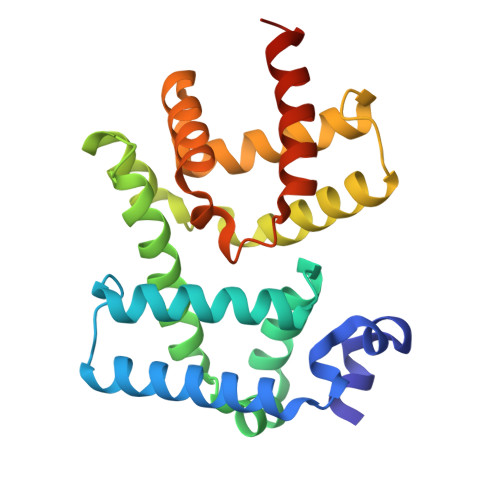
Pyrrolobenzodiazepines (PBDs) containing C8-linked aliphatic heterocycles have been developed as a new class of potent antibacterial compounds. They are active against multidrug resistant Gram-negative pathogens, including Klebsiella pneumoniae. When isolates were exposed to PBDs, they acquired resistance, with significant increases in inhibitory concentrations. Resistant strains showed mutations in genes associated with resistance to albicidin, specifically tsx and merR-family regulator albA. Heterologous expression of AlbA in E. coli and introducing the L120Q AlbA resistance-mediating modification into the genome of a sensitive K. pneumoniae strain conferred PBD and albicidin resistance. Proteomic analysis of the resistant strains showed elevated AlbA protein levels compared to isogenic wild-type strains. Crystallographic studies with the antibiotic binding domain of AlbA show binding of KMR-14-14 to the same groove shown to bind albicidin. Given the parallels between these two structurally unrelated compound classes, AlbA may offer resistance to further antibiotics and should be considered in future antibiotic discovery.
- UK Health Security Agency, Research and Evaluation, Porton Down, Salisbury, SP4 0JG, Wiltshire, UK.
Organizational Affiliation: