Download Mendeley
Antiviral signaling of a type III CRISPR-associated deaminase.
Li, Y., Li, Z., Yan, P., Hua, C., Kong, J., Wu, W., Cui, Y., Duan, Y., Li, S., Li, G., Ji, S., Chen, Y., Zhao, Y., Yang, P., Hu, C., Lu, M., Chen, M., Xiao, Y.(2025) Science 387: eadr0393-eadr0393
- PubMed: 39666823 Search on PubMed
- DOI: https://doi.org/10.1126/science.adr0393
- Primary Citation Related Structures:
8Z3K, 8Z3P, 8Z3R, 8Z40 - PubMed Abstract:
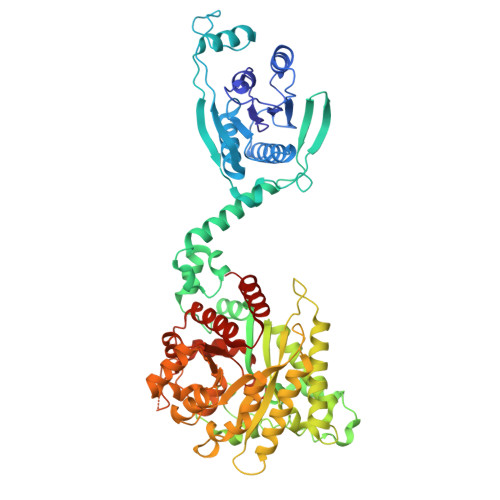
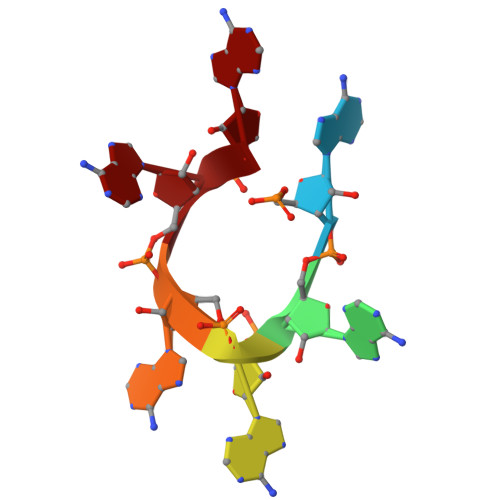
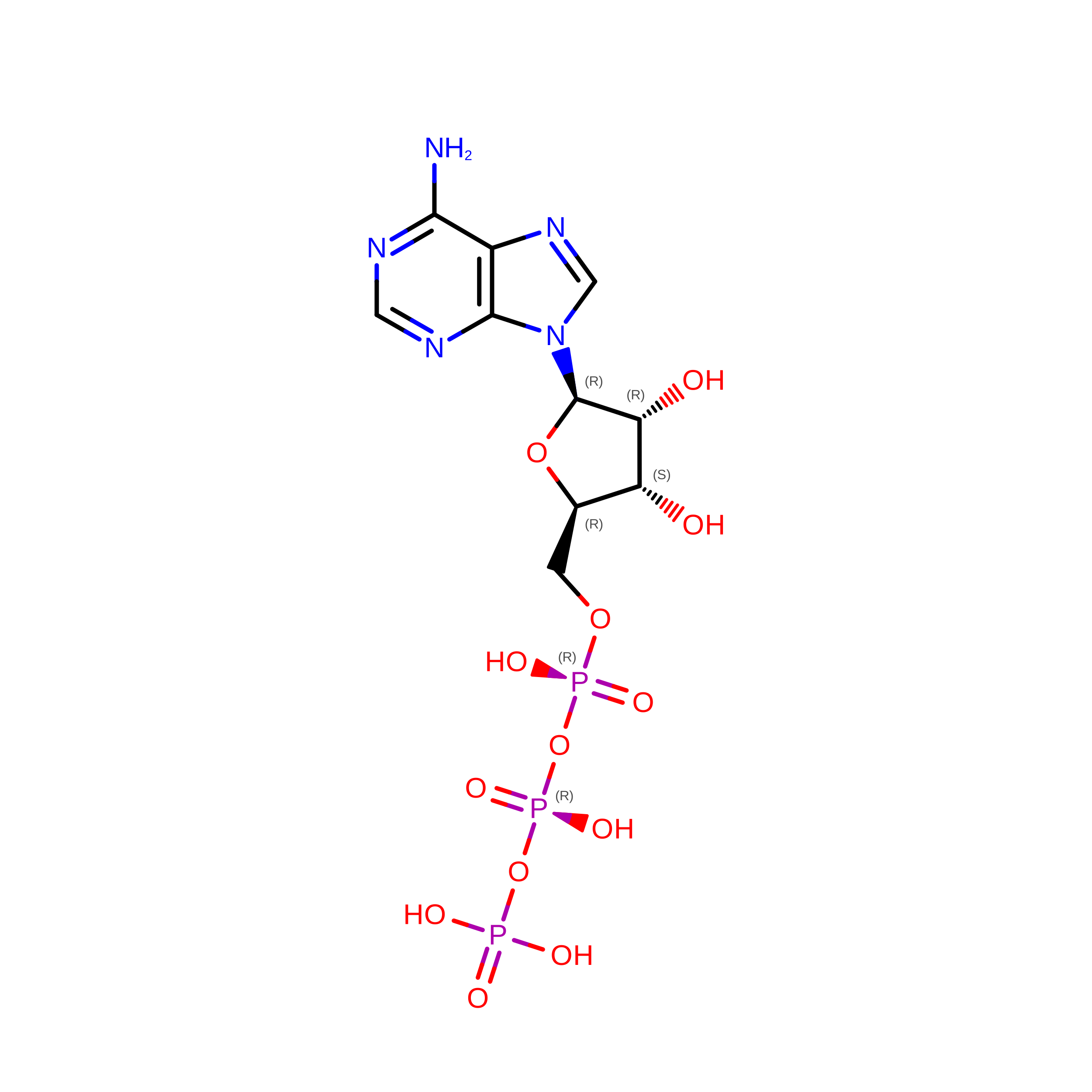
Prokaryotes have evolved diverse defense strategies against viral infection, including foreign nucleic acid degradation by CRISPR-Cas systems and DNA and RNA synthesis inhibition through nucleotide pool depletion. Here, we report an antiviral mechanism of type III CRISPR-Cas-regulated adenosine triphosphate (ATP) depletion in which ATP is converted into inosine triphosphate (ITP) by CRISPR-Cas-associated adenosine deaminase (CAAD) upon activation by either cA 4 or cA 6 , followed by hydrolysis into inosine monophosphate (IMP) by Nudix hydrolase, ultimately resulting in cell growth arrest. The cryo-electron microscopy structures of CAAD in its apo and activated forms, together with biochemical evidence, revealed how cA 4 or cA 6 binds to the CRISPR-associated Rossmann fold (CARF) domain and abrogates CAAD autoinhibition, inducing substantial conformational changes that reshape the structure of CAAD and induce its deaminase activity. Our results reveal the mechanism of a CRISPR-Cas-regulated ATP depletion antiviral strategy.
- Department of Pharmacology, School of Pharmacy, China Pharmaceutical University, Nanjing, China.
Organizational Affiliation: