Download Mendeley
Malectin Alleviates Endoplasmic Reticulum Stress in Gestational Diabetes Mellitus via Glycoprotein Quality Control Mechanisms.
Zhu, J., Zhang, Y., Wang, Y., Zhu, X., Yuan, A., Yin, W., Yu, H., Pang, X., He, Y., Wang, Y., Wang, T., Li, Y., Si, Y.(2026) Adv Sci (Weinh) : e08901-e08901
- PubMed: 42183838 Search on PubMedSearch on PubMed Central
- DOI: https://doi.org/10.1002/advs.202508901
- Primary Citation Related Structures:
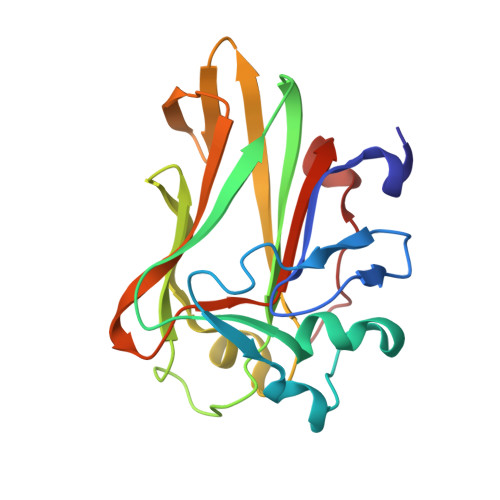
9IKP, 9IL3, 9ILA, 9ILF - PubMed Abstract:
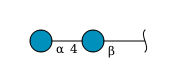
Gestational diabetes mellitus (GDM), is a prevalent metabolic disorder associated with placental dysfunction and adverse pregnancy outcomes. Emerging evidence points to endoplasmic reticulum (ER) stress as a potential initiating factor in GDM pathogenesis. Moreover, ER stress-mediated trophoblast dysfunction is recognized as a critical pathological mechanism, yet its precise role remains incompletely elucidated. Here, we demonstrate that malectin, an ER-resident lectin, is upregulated in GDM placentas and protects trophoblasts against high glucose (HG)-induced ER stress. Mechanistically, malectin recognizes Glc2-N-glycans on misfolded glycoproteins via six essential carbohydrate-binding residues, thereby facilitating glycoprotein quality control (GQC). Malectin knockdown exacerbated HG-induced ER stress, apoptosis, and impaired trophoblast invasion, syncytialization, and glucose uptake, whereas its overexpression attenuated these defects. Structural analyses revealed the molecular basis for malectin's specificity toward Glc2-N-glycan motifs. Importantly, administration of TAT-Malectin ameliorated hyperglycemia and placental ER stress in a GDM mouse model. In summary, our study provides the first evidence that malectin protects placental trophoblasts from HG-induced ER stress and damage through GQC mediated by its six key carbohydrate-binding residues. These findings establish malectin as both a key endogenous placental protector and a promising protein therapeutic candidate, offering a novel target and therapeutic strategy for GDM.
- Jiangsu Key Laboratory of Brain Disease Bioinformation, Research Center for Biochemistry and Molecular Biology, Xuzhou Medical University, Xuzhou, China.
Organizational Affiliation: