Download Mendeley
A protein-dependent riboswitch activates ribosomal frameshifting in cardioviruses.
Betts, J.K., Jeffries, C.M., Passchier, T.C., Kung, H.C.Y., Graham, S.P., Abdelhamid, M.A.S., Howard, J.A.L., Craggs, T.D., Graham, S.C., Brierley, I., Leake, M.C., Quinn, S.D., Hill, C.H.(2026) Mol Cell
- PubMed: 42628533 Search on PubMed
- DOI: https://doi.org/10.1016/j.molcel.2026.07.036
- Primary Citation Related Structures:
9RVP - PubMed Abstract:
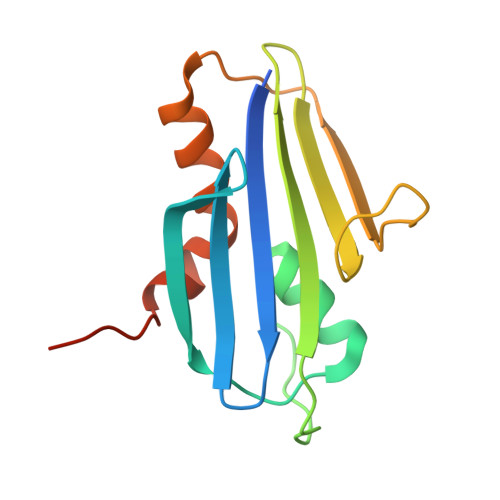
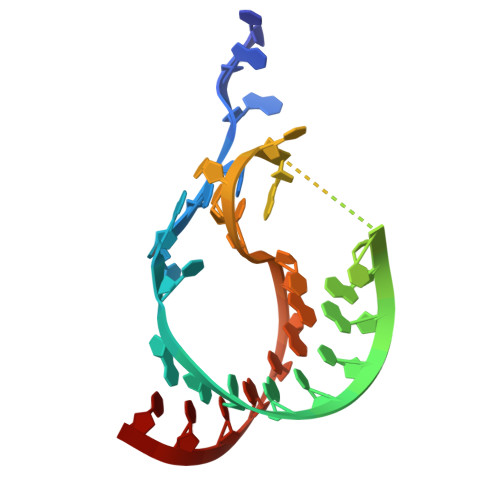
Programmed -1 ribosomal frameshifting (PRF) is a translational control mechanism used by RNA viruses to regulate the relative abundance of proteins encoded in different reading frames. Cardioviruses exhibit the highest known PRF efficiency, with ∼85% of ribosomes shifting into the -1 frame. This unusual event requires an interaction between the viral 2A protein and a stimulatory element in the RNA genome, but the basis for protein dependence is unclear. To address this, here we investigate the structure and dynamics of the PRF signal in Theiler's murine encephalitis virus (TMEV). By combining X-ray crystallography, small-angle X-ray scattering (SAXS), and single-molecule fluorescence resonance energy transfer (smFRET), we show that 2A binding switches the RNA from a stem-loop conformation into a pseudoknot, and we demonstrate that pseudoknot formation is essential for efficient PRF in vitro and in cells. Together, these findings illustrate how the cardiovirus PRF element behaves as a protein-dependent riboswitch, defining the molecular mechanism by which frameshifting is conditionally activated.
- York Structural Biology Laboratory, University of York, York YO10 5DD, UK; York Biomedical Research Institute, University of York, York YO10 5DD, UK; Department of Biology, University of York, York YO10 5DD, UK.
Organizational Affiliation: