1AZ2 | pdb_00001az2

CITRATE BOUND, C298A/W219Y MUTANT HUMAN ALDOSE REDUCTASE


Experimental Data Snapshot

  • Method: X-RAY DIFFRACTION
  • Resolution: 2.90 Å
  • R-Value Work: 
    0.196 (Depositor), 0.192 (DCC) 
  • R-Value Observed: 
    0.196 (Depositor) 

Starting Model: experimental
View more details

wwPDB Validation 3D Report Full Report

Validation slider image for 1AZ2

Ligand Structure Quality Assessment 


This is version 1.6 of the entry. See complete history

Literature

The alrestatin double-decker: binding of two inhibitor molecules to human aldose reductase reveals a new specificity determinant.

Harrison, D.H.Bohren, K.M.Petsko, G.A.Ringe, D.Gabbay, K.H.

(1997) Biochemistry 36: 16134-16140

  • DOI: https://doi.org/10.1021/bi9717136
  • Primary Citation Related Structures: 
    1AZ1, 1AZ2

  • PubMed Abstract: 

    It is generally expected that only one inhibitor molecule will bind to an enzyme active site. In fact, specific drug design theories depend upon this assumption. Here, we report the binding of two molecules of an inhibitor to the same active site which we observed in the 1.8 A resolution structure of the drug Alrestatin bound to a mutant of human aldose reductase. The two molecules of Alrestatin bind to the active site in a stacked arrangement (a double-decker). This stack positions the carboxylic acid of one drug molecule near the NADP+ cofactor at a previously determined anion binding site and the carboxylic acid of the second drug molecule near the carboxy-terminal tail of the enzyme. We propose that interactions of inhibitors with the carboxy-terminal loop of aldose reductase are critical for the development of inhibitors that are able to discriminate between aldose reductase and other members of the aldo-keto reductase superfamily. This finding suggests a new direction for the introduction of specificity to aldose reductase-targeted drugs.


  • Organizational Affiliation
    • Rosenstiel Basic Medical Sciences Research Center, Brandeis University, Waltham, Massachusetts 02554, USA.

Macromolecule Content 

  • Total Structure Weight: 36.65 kDa 
  • Atom Count: 2,570 
  • Modeled Residue Count: 314 
  • Deposited Residue Count: 315 
  • Unique protein chains: 1

Macromolecules

Find similar proteins by:|  3D Structure
Entity ID: 1
MoleculeChains  Sequence LengthOrganismDetailsImage
ALDOSE REDUCTASE315Homo sapiensMutation(s): 2 
Gene Names: ALR2
EC: 1.1.1.21 (PDB Primary Data), 1.1.1.372 (UniProt), 1.1.1.300 (UniProt), 1.1.1.54 (UniProt)
UniProt & NIH Common Fund Data Resources
Find proteins for P15121 (Homo sapiens)
Explore P15121 
Go to UniProtKB:  P15121
PHAROS:  P15121
GTEx:  ENSG00000085662 
Entity Groups
Sequence Clusters30% Identity50% Identity70% Identity90% Identity95% Identity100% Identity
UniProt GroupP15121
Sequence Annotations
Expand
Reference Sequence

Small Molecules

Ligands 2 Unique
IDChains Name / Formula / InChI Key2D Diagram3D Interactions
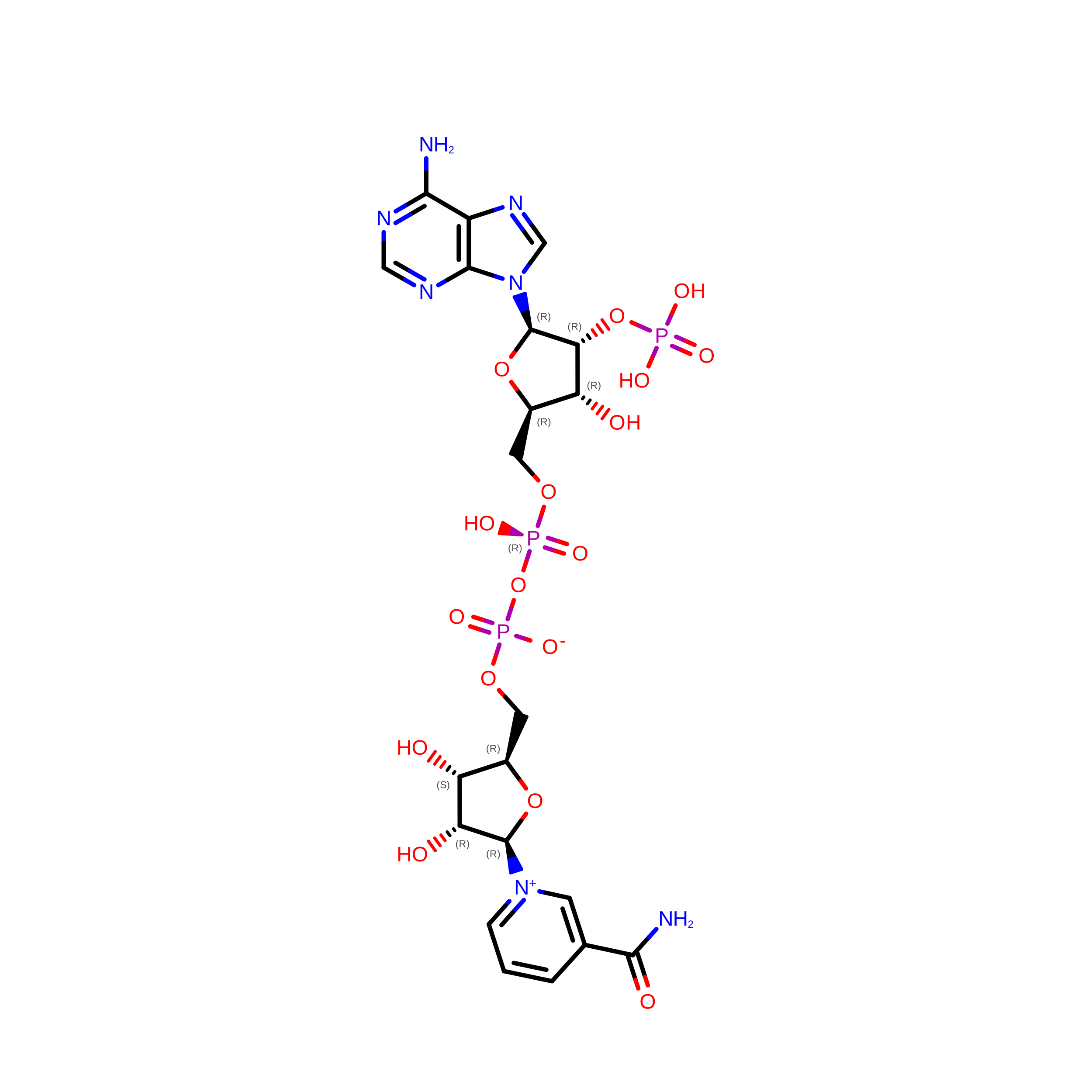
NAP

Query on NAP


Download:Ideal Coordinates CCD File
B [auth A]NADP NICOTINAMIDE-ADENINE-DINUCLEOTIDE PHOSPHATE
C21 H28 N7 O17 P3
XJLXINKUBYWONI-NNYOXOHSSA-N
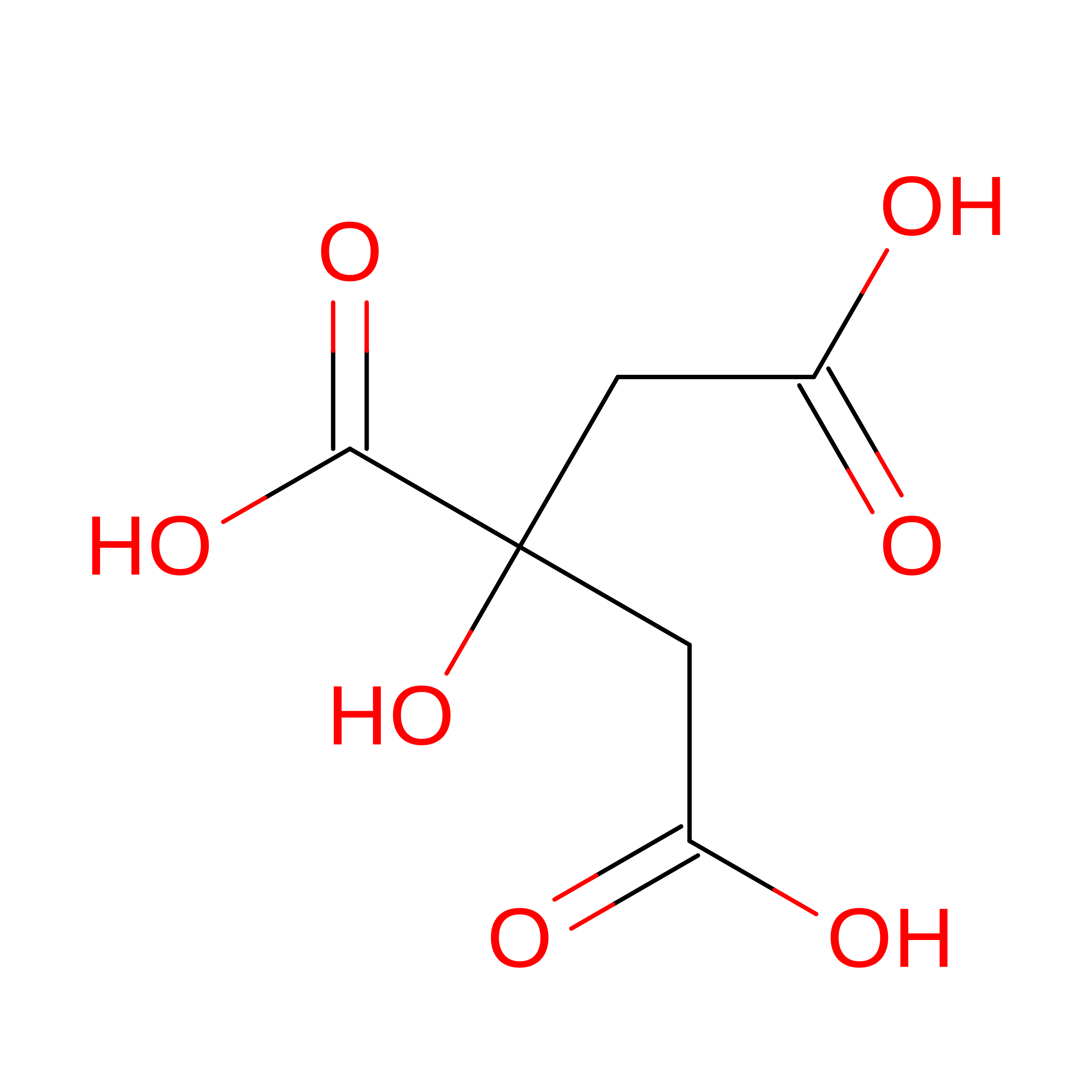
CIT

Query on CIT


Download:Ideal Coordinates CCD File
C [auth A]CITRIC ACID
C6 H8 O7
KRKNYBCHXYNGOX-UHFFFAOYSA-N

Experimental Data & Validation

Experimental Data

  • Method: X-RAY DIFFRACTION
  • Resolution: 2.90 Å
  • R-Value Work:  0.196 (Depositor), 0.192 (DCC) 
  • R-Value Observed: 0.196 (Depositor) 
Space Group: P 21 21 21
Unit Cell:
Length ( Å )Angle ( ˚ )
a = 50.034α = 90
b = 67.167β = 90
c = 92.177γ = 90
Software Package:
Software NamePurpose
X-PLORmodel building
X-PLORrefinement
XDSdata reduction
XSCALEdata scaling
X-PLORphasing

Structure Validation

View Full Validation Report


Ligand Structure Quality Assessment 


Entry History 

Deposition Data

Revision History  (Full details and data files)

  • Version 1.0: 1998-03-18
    Type: Initial release
  • Version 1.1: 2008-03-24
    Changes: Version format compliance
  • Version 1.2: 2011-07-13
    Changes: Version format compliance
  • Version 1.3: 2018-04-04
    Changes: Data collection, Other
  • Version 1.4: 2021-11-03
    Changes: Database references, Derived calculations
  • Version 1.5: 2023-08-02
    Changes: Refinement description
  • Version 1.6: 2024-05-22
    Changes: Data collection