Download Mendeley
Distinct ubiquinone binding at the oxidation and reduction sites of cytochrome bc 1.
Pietras, R., Wojcik-Augustyn, A., Mielecki, B., Sarewicz, M., Jaciuk, M., Koziej, L., Glatt, S., Osyczka, A.(2026) Proc Natl Acad Sci U S A 123: e2618242123-e2618242123
- PubMed: 42679026 Search on PubMed
- DOI: https://doi.org/10.1073/pnas.2618242123
- Primary Citation Related Structures:
29XZ, 29YA, 29YB, 29YC, 29YD, 29YE - PubMed Abstract:
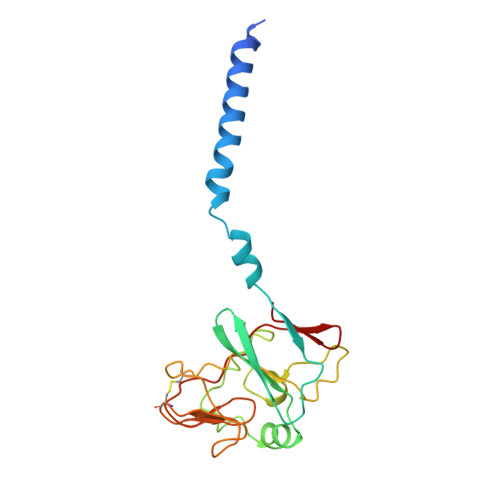
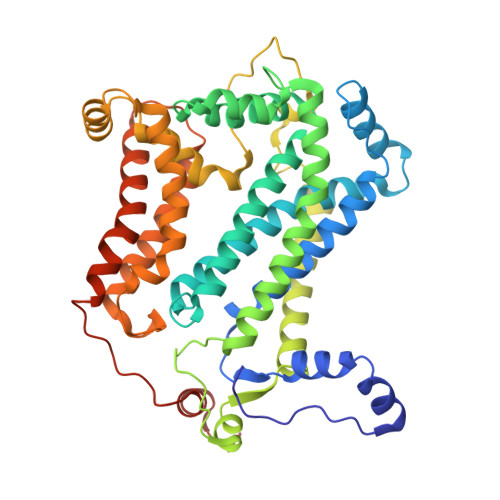
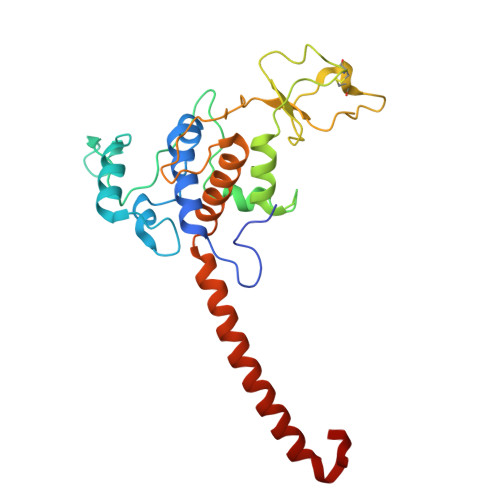
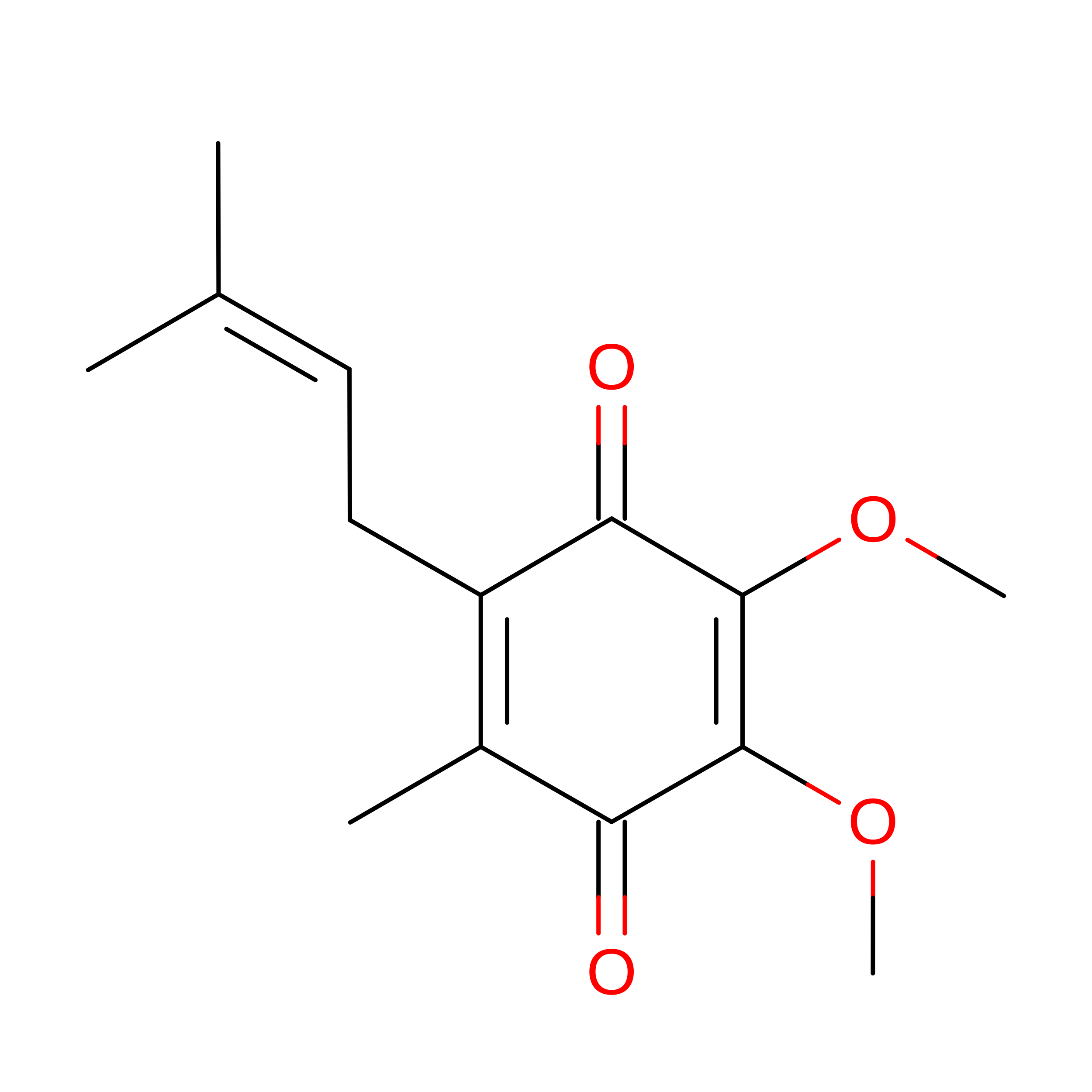
The function of cytochrome bc 1 , a widespread energy-conserving enzyme, requires the coordinated activity of two quinone-binding sites (Q o catalyzing oxidation of ubiquinol and Q i catalyzing reduction of ubiquinone). The operation of Q o , but not Q i , involves large-scale movement of the head domain of iron-sulfur protein (ISP-HD). How the respective sites accommodate quinone molecules for efficient catalysis remains elusive. Here, we present high-resolution cryoelectron microscopy structures of bacterial cytochrome bc 1 with native ubiquinone molecules in various states. They show that the quinone headgroup occupies a catalytically competent position in Q o only when the ISP-HD interacts with cytochrome b. When the ISP-HD does not interact with this subunit, quinone is present in the hydrophobic groove, however its headgroup is prevented from reaching the catalytic cavity by steric hindrance. In this state, the position of quinone headgroup is clearly not fixed. In contrast, all structures show Q i in the same state with a well-resolved and catalytically competent quinone headgroup, but with its tail not fixed. These distinctly different ubiquinone binding modes for Q o and Q i secure the smooth operation of cytochrome bc 1 .
- Faculty of Biochemistry, Biophysics and Biotechnology, Department of Molecular Biophysics, Jagiellonian University, Kraków 30-387, Poland.
Organizational Affiliation: