6EPZ | pdb_00006epz

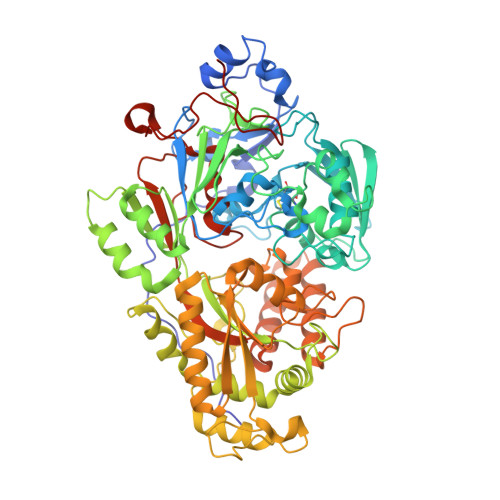
Structure of the periplasmic binding protein MelB (Atu4661) in complex with melibiose from Agrobacterium fabrum C58


Experimental Data Snapshot

  • Method: X-RAY DIFFRACTION
  • Resolution: 1.80 Å
  • R-Value Free: 
    0.195 (Depositor), 0.205 (DCC) 
  • R-Value Work: 
    0.177 (Depositor), 0.186 (DCC) 
  • R-Value Observed: 
    0.178 (Depositor) 

Starting Model: experimental
View more details

wwPDB Validation 3D Report Full Report

Validation slider image for 6EPZ

This is version 2.2 of the entry. See complete history

Literature

The plant defense signal galactinol is specifically used as a nutrient by the bacterial pathogenAgrobacterium fabrum.

Meyer, T.Vigouroux, A.Aumont-Nicaise, M.Comte, G.Vial, L.Lavire, C.Morera, S.

(2018) J Biological Chem 293: 7930-7941

  • DOI: https://doi.org/10.1074/jbc.RA118.001856
  • Primary Citation Related Structures: 
    6EPY, 6EPZ, 6EQ0, 6EQ1, 6EQ8

  • PubMed Abstract: 

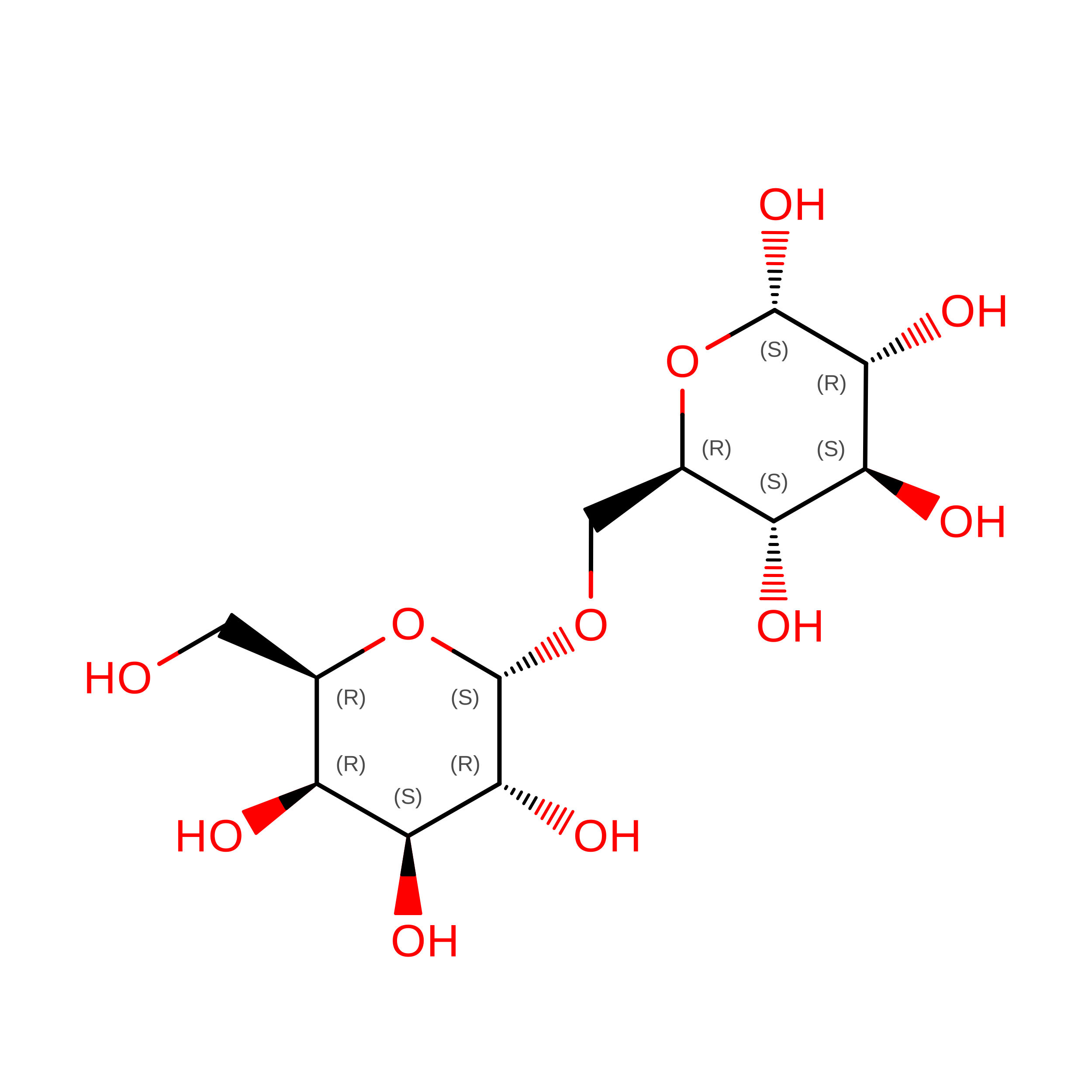
    The bacterial plant pathogen Agrobacterium fabrum uses periplasmic-binding proteins (PBPs) along with ABC transporters to import a wide variety of plant molecules as nutrients. Nonetheless, how A. fabrum acquires plant metabolites is incompletely understood. Using genetic approaches and affinity measurements, we identified here the PBP MelB and its transporter as being responsible for the uptake of the raffinose family of oligosaccharides (RFO), which are the most widespread d-galactose-containing oligosaccharides in higher plants. We also found that the RFO precursor galactinol, recently described as a plant defense molecule, is imported into Agrobacterium via MelB with nanomolar range affinity. Structural analyses and binding mode comparisons of the X-ray structures of MelB in complex with raffinose, stachyose, galactinol, galactose, and melibiose (a raffinose degradation product) revealed how MelB recognizes the nonreducing end galactose common to all these ligands and that MelB has a strong preference for a two-unit sugar ligand. Of note, MelB conferred a competitive advantage to A. fabrum in colonizing the rhizosphere of tomato plants. Our integrative work highlights the structural and functional characteristics of melibiose and galactinol assimilation by A. fabrum , leading to a competitive advantage for these bacteria in the rhizosphere. We propose that the PBP MelB, which is highly conserved among both symbionts and pathogens from Rhizobiace family, is a major trait in these bacteria required for early steps of plant colonization.


  • Organizational Affiliation
    • UMR Ecologie Microbienne, CNRS, INRA, VetAgro Sup, UCBL, Université de Lyon, F-69622, Villeurbanne, Lyon, France.

Macromolecule Content 

  • Total Structure Weight: 308.27 kDa 
  • Atom Count: 22,767 
  • Modeled Residue Count: 2,687 
  • Deposited Residue Count: 2,732 
  • Unique protein chains: 1

Macromolecules

Find similar proteins by:|  3D Structure
Entity ID: 1
MoleculeChains  Sequence LengthOrganismDetailsImage
Periplasmic alpha-galactoside-binding proteinA,
B [auth D],
C,
D [auth B]
683Agrobacterium tumefaciensMutation(s): 0 
Gene Names: SY94_4618

Oligosaccharides

Help  
Entity ID: 2
MoleculeChains Length2D Diagram GlycosylationD Interactions
alpha-D-galactopyranose-(1-6)-alpha-D-glucopyranose
E, F, G, H
2N/A
Glycosylation Resources
GlyTouCan: G54976AD
GlyCosmos: G54976AD
GlyGen: G54976AD

Small Molecules

Ligands 5 Unique
IDChains Name / Formula / InChI Key2D Diagram3D Interactions
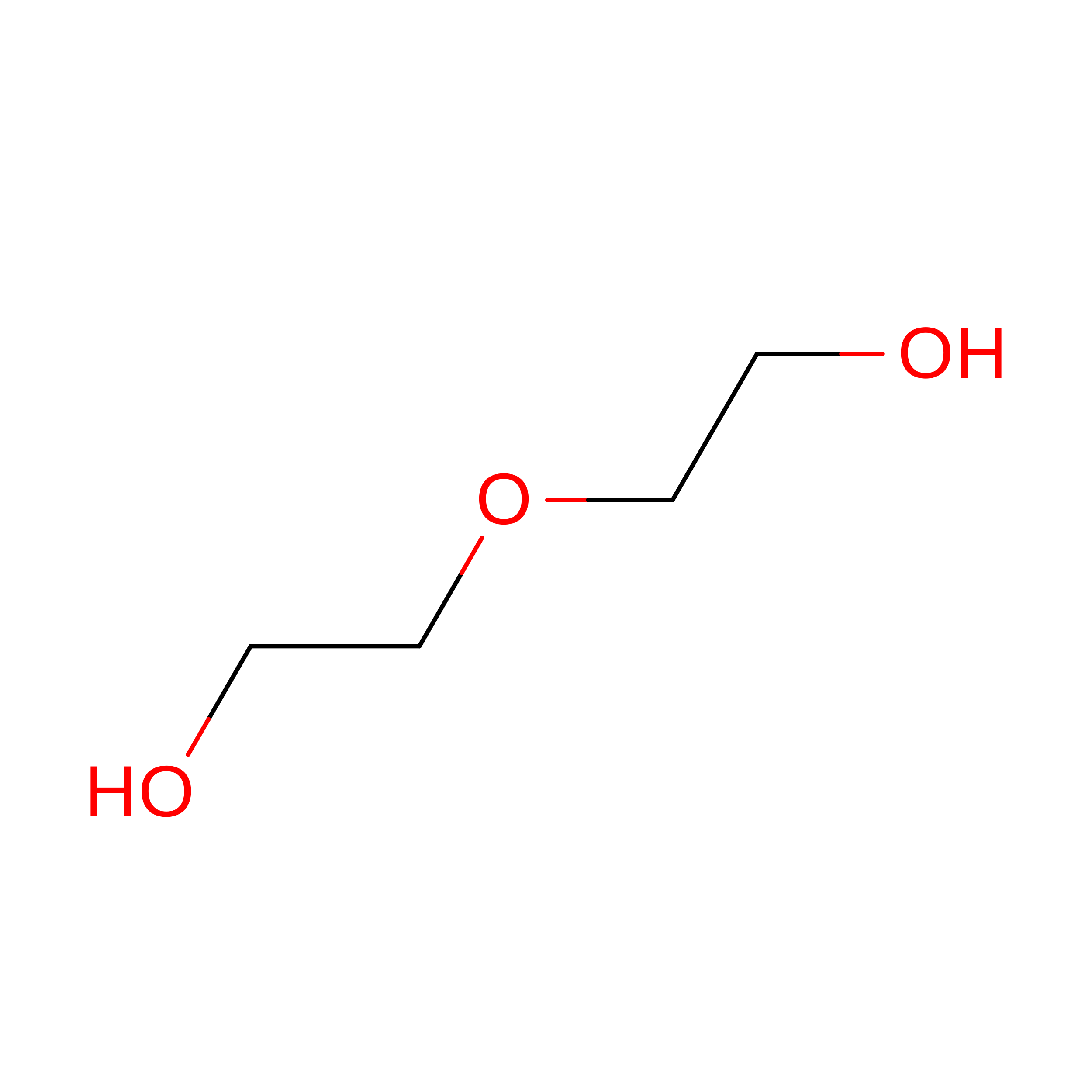
PEG

Query on PEG


Download:Ideal Coordinates CCD File
BA [auth D]DI(HYDROXYETHYL)ETHER
C4 H10 O3
MTHSVFCYNBDYFN-UHFFFAOYSA-N
EDO

Query on EDO


Download:Ideal Coordinates CCD File
EA [auth C]
J [auth A]
K [auth A]
L [auth A]
M [auth A]
EA [auth C],
J [auth A],
K [auth A],
L [auth A],
M [auth A],
PA [auth B],
QA [auth B],
U [auth D],
V [auth D]
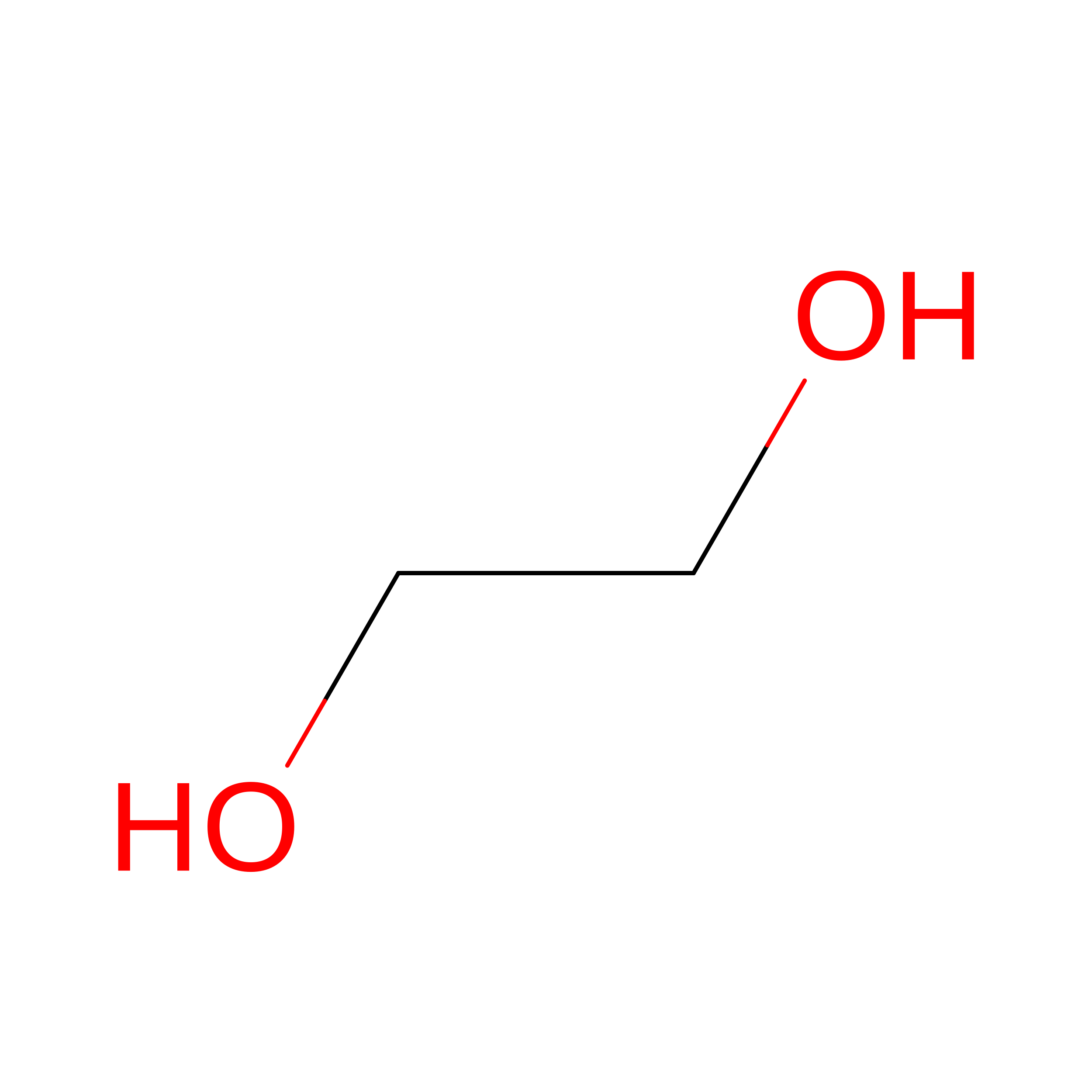
1,2-ETHANEDIOL
C2 H6 O2
LYCAIKOWRPUZTN-UHFFFAOYSA-N
CL

Query on CL


Download:Ideal Coordinates CCD File
AA [auth D]CHLORIDE ION
Cl
VEXZGXHMUGYJMC-UHFFFAOYSA-M
MG

Query on MG


Download:Ideal Coordinates CCD File
CA [auth C],
DA [auth C],
I [auth A],
OA [auth B],
T [auth D]
MAGNESIUM ION
Mg
JLVVSXFLKOJNIY-UHFFFAOYSA-N
NA

Query on NA


Download:Ideal Coordinates CCD File
FA [auth C]
GA [auth C]
HA [auth C]
IA [auth C]
JA [auth C]
FA [auth C],
GA [auth C],
HA [auth C],
IA [auth C],
JA [auth C],
KA [auth C],
LA [auth C],
MA [auth C],
N [auth A],
NA [auth C],
O [auth A],
P [auth A],
Q [auth A],
R [auth A],
RA [auth B],
S [auth A],
SA [auth B],
TA [auth B],
UA [auth B],
VA [auth B],
W [auth D],
WA [auth B],
X [auth D],
XA [auth B],
Y [auth D],
YA [auth B],
Z [auth D],
ZA [auth B]
SODIUM ION
Na
FKNQFGJONOIPTF-UHFFFAOYSA-N

Experimental Data & Validation

Experimental Data

  • Method: X-RAY DIFFRACTION
  • Resolution: 1.80 Å
  • R-Value Free:  0.195 (Depositor), 0.205 (DCC) 
  • R-Value Work:  0.177 (Depositor), 0.186 (DCC) 
  • R-Value Observed: 0.178 (Depositor) 
Space Group: C 1 2 1
Unit Cell:
Length ( Å )Angle ( ˚ )
a = 351.61α = 90
b = 73.73β = 105.38
c = 107.58γ = 90
Software Package:
Software NamePurpose
BUSTERrefinement
XDSdata reduction
XSCALEdata scaling
FFTphasing

Structure Validation

View Full Validation Report


Entry History 

& Funding Information

Deposition Data


Funding OrganizationLocationGrant Number
CNRSFranceMI

Revision History  (Full details and data files)

  • Version 1.0: 2018-04-11
    Type: Initial release
  • Version 1.1: 2018-06-06
    Changes: Data collection, Database references, Derived calculations, Structure summary
  • Version 2.0: 2020-07-29
    Type: Remediation
    Reason: Carbohydrate remediation
    Changes: Atomic model, Data collection, Derived calculations, Non-polymer description, Structure summary
  • Version 2.1: 2024-01-17
    Changes: Data collection, Database references, Refinement description, Structure summary
  • Version 2.2: 2024-11-13
    Changes: Structure summary