6PYA | pdb_00006pya

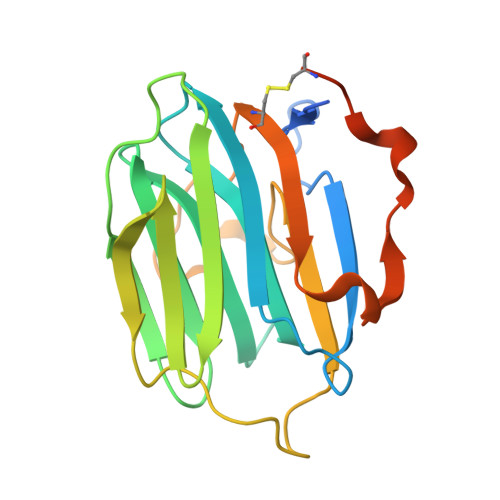
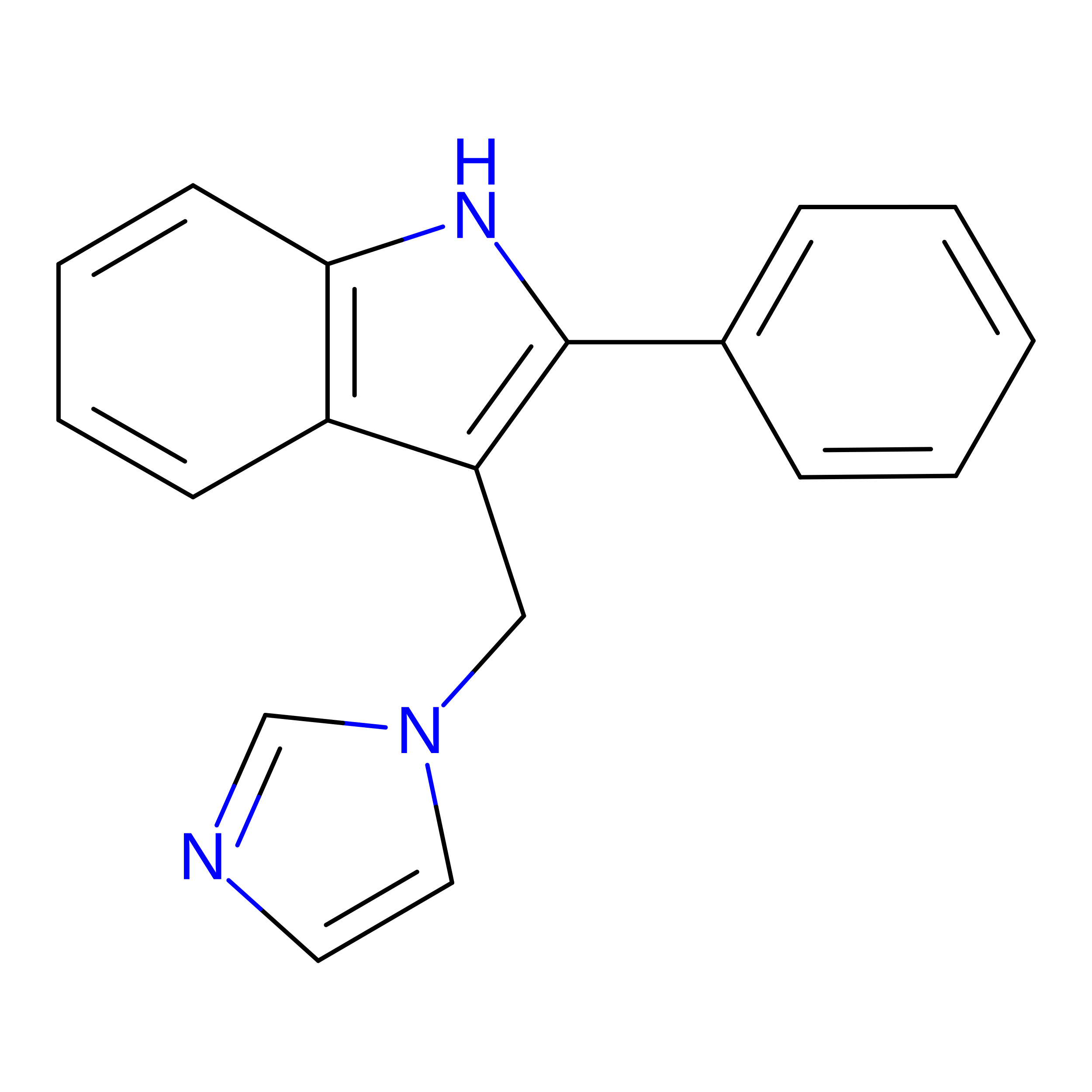
Sex Hormone-binding globulin mutant E176K in complex with IPI


Experimental Data Snapshot

  • Method: X-RAY DIFFRACTION
  • Resolution: 1.71 Å
  • R-Value Free: 
    0.216 (Depositor), 0.215 (DCC) 
  • R-Value Work: 
    0.185 (Depositor), 0.185 (DCC) 
  • R-Value Observed: 
    0.188 (Depositor) 

wwPDB Validation 3D Report Full Report

Validation slider image for 6PYA

Ligand Structure Quality Assessment 


This is version 1.3 of the entry. See complete history

Literature

Molecular interactions between sex hormone-binding globulin and nonsteroidal ligands that enhance androgen activity.

Round, P.Das, S.Wu, T.S.Wahala, K.Van Petegem, F.Hammond, G.L.

(2020) J Biological Chem 295: 1202-1211

  • DOI: https://doi.org/10.1074/jbc.RA119.011051
  • Primary Citation Related Structures: 
    6PYA, 6PYB, 6PYF

  • PubMed Abstract: 

    Sex hormone-binding globulin (SHBG) determines the equilibrium between free and protein-bound androgens and estrogens in the blood and regulates their access to target tissues. Using crystallographic approaches and radiolabeled competitive binding-capacity assays, we report here how two nonsteroidal compounds bind to human SHBG, and how they influence androgen activity in cell culture. We found that one of these compounds, (-)3,4-divanillyltetrahydrofuran (DVT), present in stinging nettle root extracts and used as a nutraceutical, binds SHBG with relatively low affinity. By contrast, a synthetic compound, 3-(1H-imidazol-1-ylmethyl)-2phenyl-1H-indole (IPI), bound SHBG with an affinity similar to that of testosterone and estradiol. Crystal structures of SHBG in complex with DVT or IPI at 1.71-1.80 Å resolutions revealed their unique orientations in the SHBG ligand-binding pocket and suggested opportunities for the design of other nonsteroidal ligands of SHBG. As observed for estradiol but not testosterone, IPI binding to SHBG was reduced by ∼20-fold in the presence of zinc, whereas DVT binding was almost completely lost. Estradiol-dependent fibulin-2 interactions with SHBG similarly occurred for IPI-bound SHBG, but not with DVT-bound SHBG. Both DVT and IPI increased the activity of testosterone in a cell culture androgen reporter system by competitively displacing testosterone from SHBG. These findings indicate how nonsteroidal ligands of SHBG maybe designed to modulate the bioavailability of sex steroids.


  • Organizational Affiliation
    • Department of Cellular & Physiological Sciences, The University of British Columbia, Vancouver, BC Canada V6T 1Z4.

Macromolecule Content 

  • Total Structure Weight: 22.92 kDa 
  • Atom Count: 1,555 
  • Modeled Residue Count: 175 
  • Deposited Residue Count: 205 
  • Unique protein chains: 1

Macromolecules

Find similar proteins by:|  3D Structure
Entity ID: 1
MoleculeChains  Sequence LengthOrganismDetailsImage
Sex hormone-binding globulin205Homo sapiensMutation(s): 1 
Gene Names: SHBG
UniProt & NIH Common Fund Data Resources
Find proteins for P04278 (Homo sapiens)
Explore P04278 
Go to UniProtKB:  P04278
PHAROS:  P04278
GTEx:  ENSG00000129214 
Entity Groups
Sequence Clusters30% Identity50% Identity70% Identity90% Identity95% Identity100% Identity
UniProt GroupP04278
Sequence Annotations
Expand
Reference Sequence

Experimental Data & Validation

Experimental Data

  • Method: X-RAY DIFFRACTION
  • Resolution: 1.71 Å
  • R-Value Free:  0.216 (Depositor), 0.215 (DCC) 
  • R-Value Work:  0.185 (Depositor), 0.185 (DCC) 
  • R-Value Observed: 0.188 (Depositor) 
Space Group: P 43 2 2
Unit Cell:
Length ( Å )Angle ( ˚ )
a = 52.241α = 90
b = 52.241β = 90
c = 147.87γ = 90
Software Package:
Software NamePurpose
PHENIXrefinement
Aimlessdata scaling
PDB_EXTRACTdata extraction
XDSdata reduction
PHASERphasing

Structure Validation

View Full Validation Report


Ligand Structure Quality Assessment 


Entry History 

& Funding Information

Deposition Data


Funding OrganizationLocationGrant Number
Canadian Institutes of Health Research (CIHR)Canada--

Revision History  (Full details and data files)

  • Version 1.0: 2019-12-25
    Type: Initial release
  • Version 1.1: 2020-01-01
    Changes: Database references
  • Version 1.2: 2020-02-12
    Changes: Database references
  • Version 1.3: 2024-10-30
    Changes: Data collection, Database references, Structure summary