6YGB | pdb_00006ygb

Crystal structure of the NatC complex bound to CoA


Experimental Data Snapshot

  • Method: X-RAY DIFFRACTION
  • Resolution: 2.45 Å
  • R-Value Free: 
    0.236 (Depositor), 0.238 (DCC) 
  • R-Value Work: 
    0.203 (Depositor), 0.205 (DCC) 
  • R-Value Observed: 
    0.205 (Depositor) 

Starting Model: experimental
View more details

wwPDB Validation 3D Report Full Report

Validation slider image for 6YGB

Ligand Structure Quality Assessment 


This is version 1.2 of the entry. See complete history

Literature

Divergent architecture of the heterotrimeric NatC complex explains N-terminal acetylation of cognate substrates.

Grunwald, S.Hopf, L.V.M.Bock-Bierbaum, T.Lally, C.C.M.Spahn, C.M.T.Daumke, O.

(2020) Nat Commun 11: 5506-5506

  • DOI: https://doi.org/10.1038/s41467-020-19321-8
  • Primary Citation Related Structures: 
    6YGA, 6YGB, 6YGC, 6YGD

  • PubMed Abstract: 

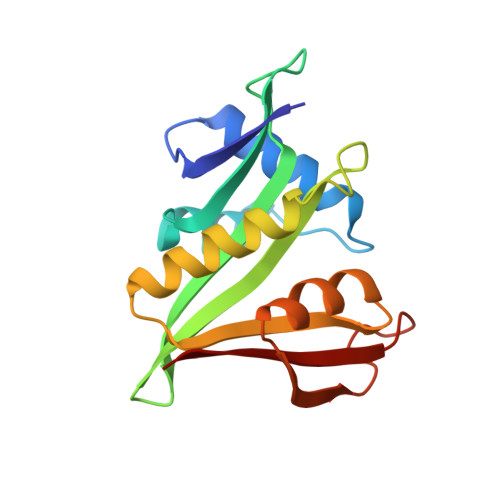
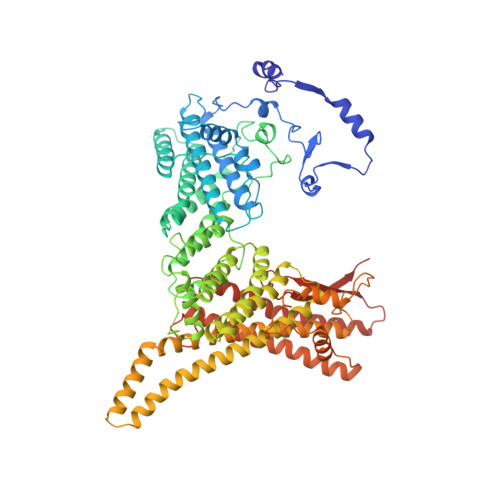
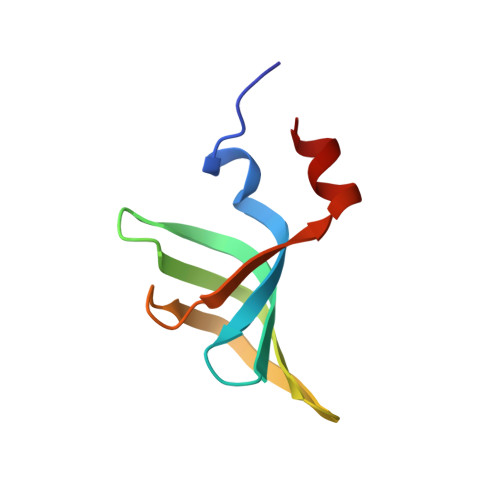
    The heterotrimeric NatC complex, comprising the catalytic Naa30 and the two auxiliary subunits Naa35 and Naa38, co-translationally acetylates the N-termini of numerous eukaryotic target proteins. Despite its unique subunit composition, its essential role for many aspects of cellular function and its suggested involvement in disease, structure and mechanism of NatC have remained unknown. Here, we present the crystal structure of the Saccharomyces cerevisiae NatC complex, which exhibits a strikingly different architecture compared to previously described N-terminal acetyltransferase (NAT) complexes. Cofactor and ligand-bound structures reveal how the first four amino acids of cognate substrates are recognized at the Naa30-Naa35 interface. A sequence-specific, ligand-induced conformational change in Naa30 enables efficient acetylation. Based on detailed structure-function studies, we suggest a catalytic mechanism and identify a ribosome-binding patch in an elongated tip region of NatC. Our study reveals how NAT machineries have divergently evolved to N-terminally acetylate specific subsets of target proteins.


  • Organizational Affiliation
    • Department of Crystallography, Max Delbrück Center for Molecular Medicine, 13125, Berlin, Germany.

Macromolecule Content 

  • Total Structure Weight: 114.73 kDa 
  • Atom Count: 8,118 
  • Modeled Residue Count: 961 
  • Deposited Residue Count: 971 
  • Unique protein chains: 3

Macromolecules

Find similar proteins by:|  3D Structure
Entity ID: 1
MoleculeChains  Sequence LengthOrganismDetailsImage
N-alpha-acetyltransferase 30159Saccharomyces cerevisiaeMutation(s): 0 
Gene Names: MAK3NAA30YPR051WYP9499.08
EC: 2.3.1.256
UniProt
Find proteins for Q03503 (Saccharomyces cerevisiae (strain ATCC 204508 / S288c))
Explore Q03503 
Go to UniProtKB:  Q03503
Entity Groups
Sequence Clusters30% Identity50% Identity70% Identity90% Identity95% Identity100% Identity
UniProt GroupQ03503
Sequence Annotations
Expand
Reference Sequence
Find similar proteins by:|  3D Structure
Entity ID: 2
MoleculeChains  Sequence LengthOrganismDetailsImage
N-alpha-acetyltransferase 35, NatC auxiliary subunit735Saccharomyces cerevisiaeMutation(s): 0 
Gene Names: MAK10NAA35YEL053C
UniProt
Find proteins for Q02197 (Saccharomyces cerevisiae (strain ATCC 204508 / S288c))
Explore Q02197 
Go to UniProtKB:  Q02197
Entity Groups
Sequence Clusters30% Identity50% Identity70% Identity90% Identity95% Identity100% Identity
UniProt GroupQ02197
Sequence Annotations
Expand
Reference Sequence
Find similar proteins by:|  3D Structure
Entity ID: 3
MoleculeChains  Sequence LengthOrganismDetailsImage
N-alpha-acetyltransferase 38, NatC auxiliary subunit77Saccharomyces cerevisiaeMutation(s): 0 
Gene Names: MAK31NAA38YCR020C-AYCR20C-A
UniProt
Find proteins for P23059 (Saccharomyces cerevisiae (strain ATCC 204508 / S288c))
Explore P23059 
Go to UniProtKB:  P23059
Entity Groups
Sequence Clusters30% Identity50% Identity70% Identity90% Identity95% Identity100% Identity
UniProt GroupP23059
Sequence Annotations
Expand
Reference Sequence

Small Molecules

Ligands 5 Unique
IDChains Name / Formula / InChI Key2D Diagram3D Interactions
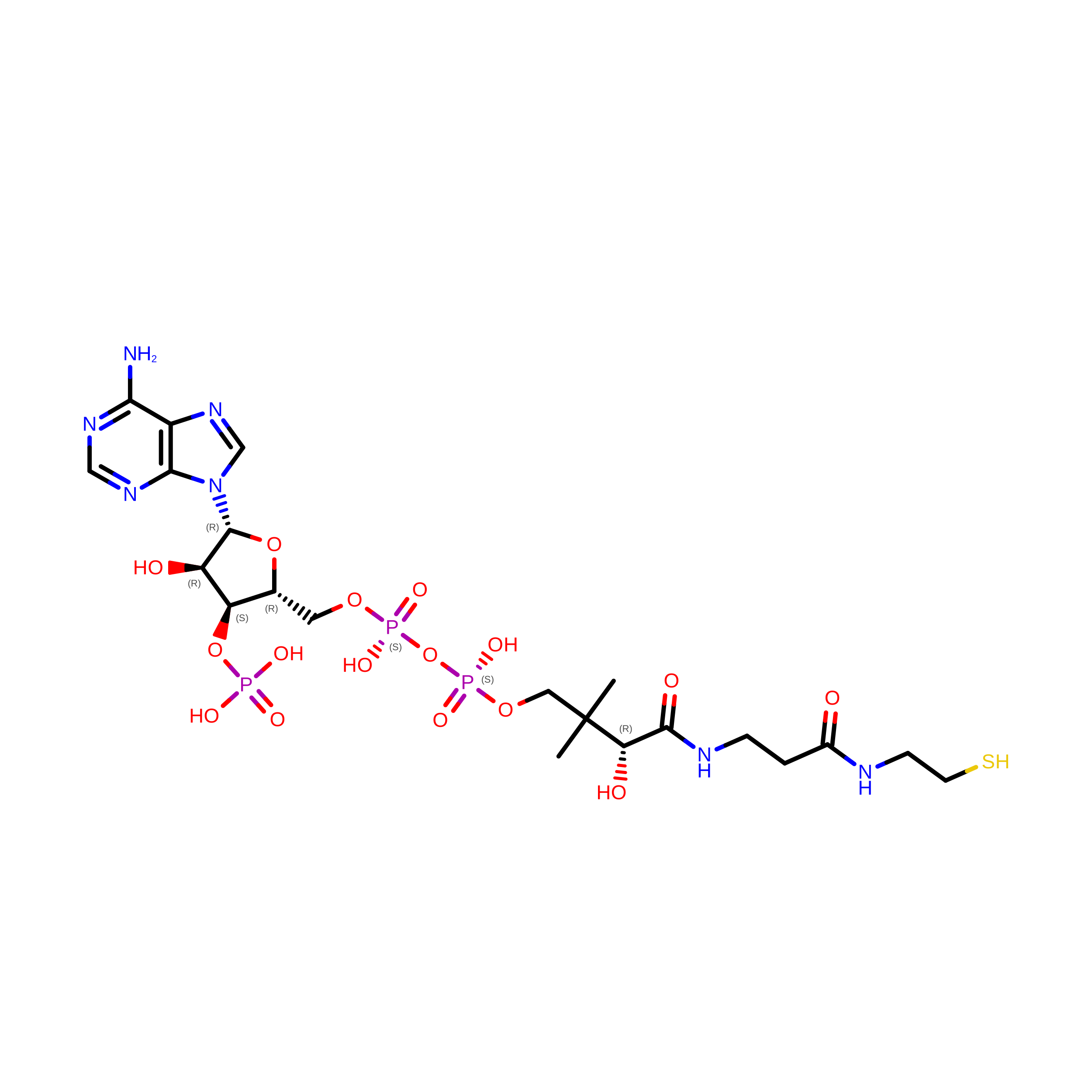
COA
(Subject of Investigation/LOI)

Query on COA


Download:Ideal Coordinates CCD File
D [auth A]COENZYME A
C21 H36 N7 O16 P3 S
RGJOEKWQDUBAIZ-IBOSZNHHSA-N
IOD

Query on IOD


Download:Ideal Coordinates CCD File
GA [auth C]
J [auth B]
K [auth B]
L [auth B]
M [auth B]
GA [auth C],
J [auth B],
K [auth B],
L [auth B],
M [auth B],
N [auth B],
O [auth B],
P [auth B],
Q [auth B]
IODIDE ION
I
XMBWDFGMSWQBCA-UHFFFAOYSA-M
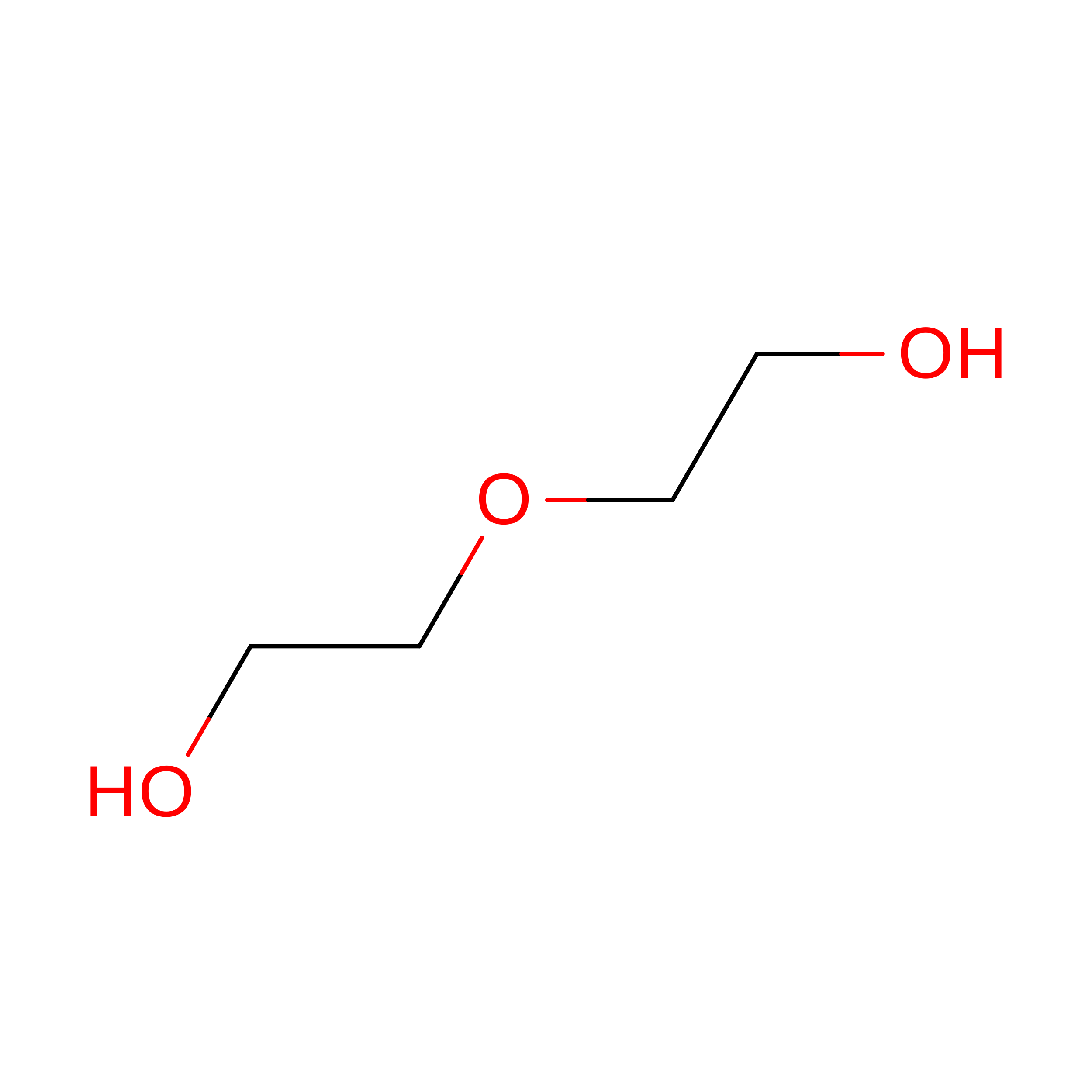
PEG

Query on PEG


Download:Ideal Coordinates CCD File
F [auth A],
G [auth A],
Y [auth B]
DI(HYDROXYETHYL)ETHER
C4 H10 O3
MTHSVFCYNBDYFN-UHFFFAOYSA-N
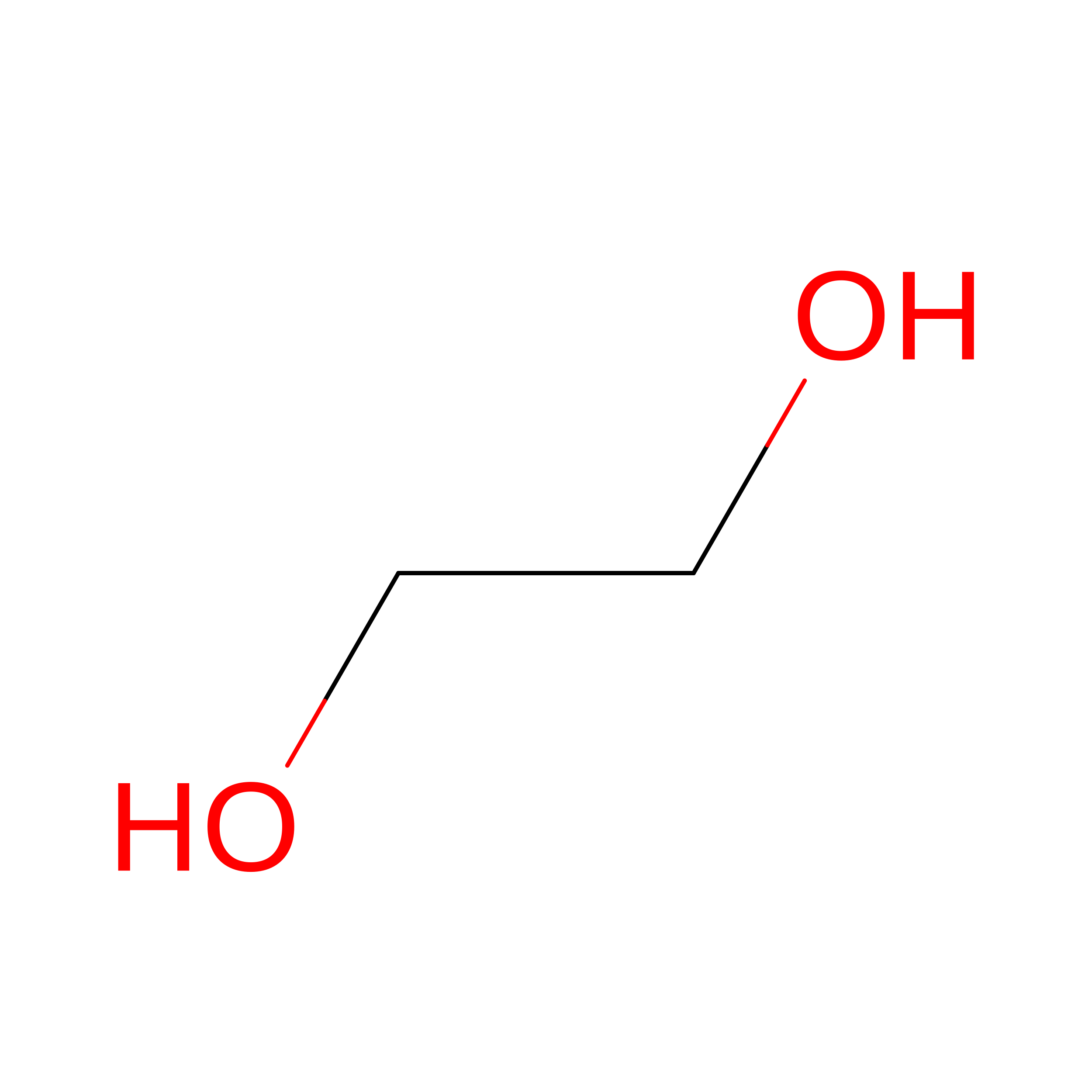
EDO

Query on EDO


Download:Ideal Coordinates CCD File
AA [auth B]
BA [auth B]
CA [auth B]
DA [auth B]
EA [auth B]
AA [auth B],
BA [auth B],
CA [auth B],
DA [auth B],
EA [auth B],
FA [auth B],
H [auth A],
I [auth A],
Z [auth B]
1,2-ETHANEDIOL
C2 H6 O2
LYCAIKOWRPUZTN-UHFFFAOYSA-N
CL

Query on CL


Download:Ideal Coordinates CCD File
E [auth A]
R [auth B]
S [auth B]
T [auth B]
U [auth B]
E [auth A],
R [auth B],
S [auth B],
T [auth B],
U [auth B],
V [auth B],
W [auth B],
X [auth B]
CHLORIDE ION
Cl
VEXZGXHMUGYJMC-UHFFFAOYSA-M

Experimental Data & Validation

Experimental Data

  • Method: X-RAY DIFFRACTION
  • Resolution: 2.45 Å
  • R-Value Free:  0.236 (Depositor), 0.238 (DCC) 
  • R-Value Work:  0.203 (Depositor), 0.205 (DCC) 
  • R-Value Observed: 0.205 (Depositor) 
Space Group: P 21 21 21
Unit Cell:
Length ( Å )Angle ( ˚ )
a = 48.042α = 90
b = 139.789β = 90
c = 166.561γ = 90
Software Package:
Software NamePurpose
XDSdata reduction
XSCALEdata scaling
PHASERphasing
PHENIXrefinement
PDB_EXTRACTdata extraction

Structure Validation

View Full Validation Report


Ligand Structure Quality Assessment 


Entry History 

& Funding Information

Deposition Data


Funding OrganizationLocationGrant Number
German Research Foundation (DFG)GermanySFB958-A12

Revision History  (Full details and data files)

  • Version 1.0: 2020-10-28
    Type: Initial release
  • Version 1.1: 2020-11-18
    Changes: Database references
  • Version 1.2: 2024-01-24
    Changes: Data collection, Database references, Refinement description