Download Mendeley
Enzyme-Directed Assembly of Antiparallel Cellulose II Nanocrystals: Unraveling the Mechanism Beyond Spontaneous Crystallization.
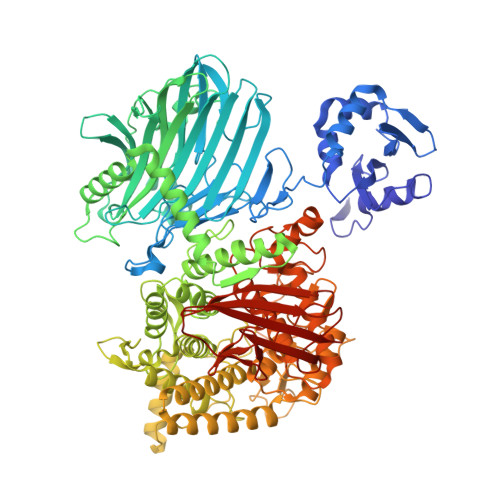
Kuga, T., Sunagawa, N., Kobayashi, K., Yamada, H., Imai, T., Uchihashi, T., Igarashi, K.(2026) JACS Au 6: 154-165
- PubMed: 41614162 Search on PubMedSearch on PubMed Central
- DOI: https://doi.org/10.1021/jacsau.5c00993
- Primary Citation Related Structures:
8YAQ - PubMed Abstract:
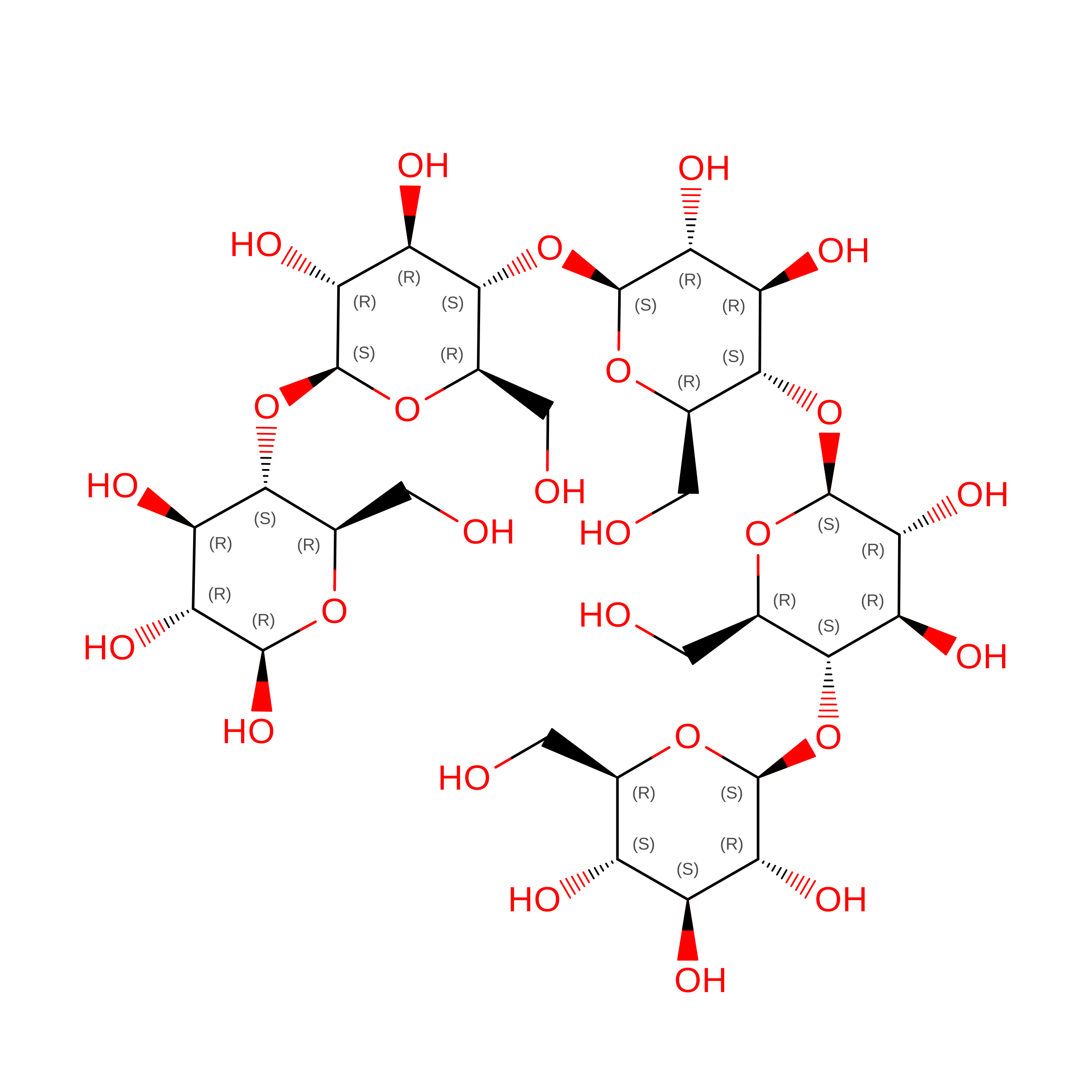
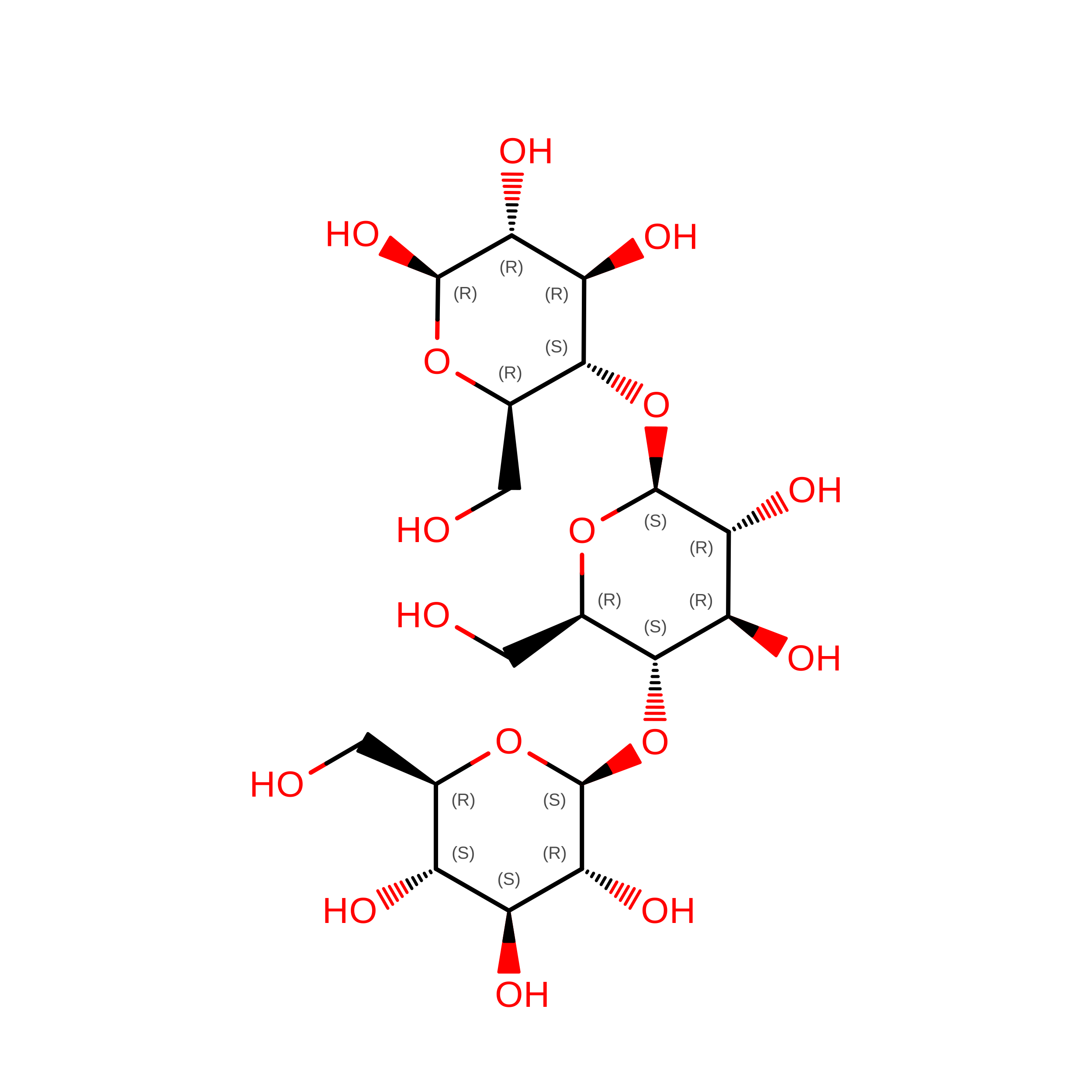
Humans have long utilized cellulose II, known as regenerated cellulose, for fibers like rayon and Cupra and films like cellophane. While cellulose I, found in nature, consists of parallel molecular chains, cellulose II is characterized by the stable arrangement of molecules in an antiparallel orientation. Enzymatic synthesis of cellulose in vitro also affords cellulose II with various morphologies, from monolayer lamellae crystals to gels, but its formation mechanism remains obscure. Here, we demonstrate that cellodextrin phosphorylase (CDP) catalyzes the synthesis and orchestrates the antiparallel self-assembly of cellulose II nanocrystals, exceeding the paradigm of spontaneous crystallization. High-resolution structural analysis reveals CDP's key role in dictating crystal size and alignment, bridging the gap between enzymatic catalysis and biodirected material architecture. Our research unveils a unique protein-templated assembly process for advanced cellulose materials, paving the way for enzyme-guided construction of next-generation functional nanostructures.
- Department of Biomaterial Sciences, Graduate School of Agricultural and Life Sciences, The University of Tokyo, 1-1-1 Yayoi, Bunkyo-ku, Tokyo 113-8657, Japan.
Organizational Affiliation: