Download Mendeley
A single allosteric site merges activation, modulation and inhibition in TRPM5.
Ruan, Z., Lee, J., Li, Y., Orozco, I.J., Du, J., Lu, W.(2026) Nat Chem Biol 22: 402-410
- PubMed: 41491833 Search on PubMedSearch on PubMed Central
- DOI: https://doi.org/10.1038/s41589-025-02097-7
- Primary Citation Related Structures:
9P3N, 9P3O, 9P3P, 9P3Q, 9P3R, 9P3S, 9P3T, 9P3U, 9P3V, 9P3W - PubMed Abstract:
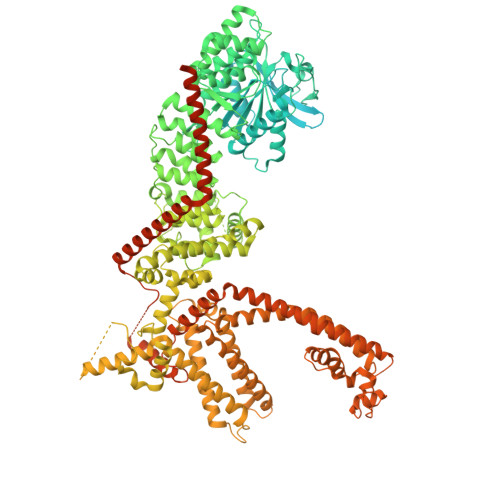
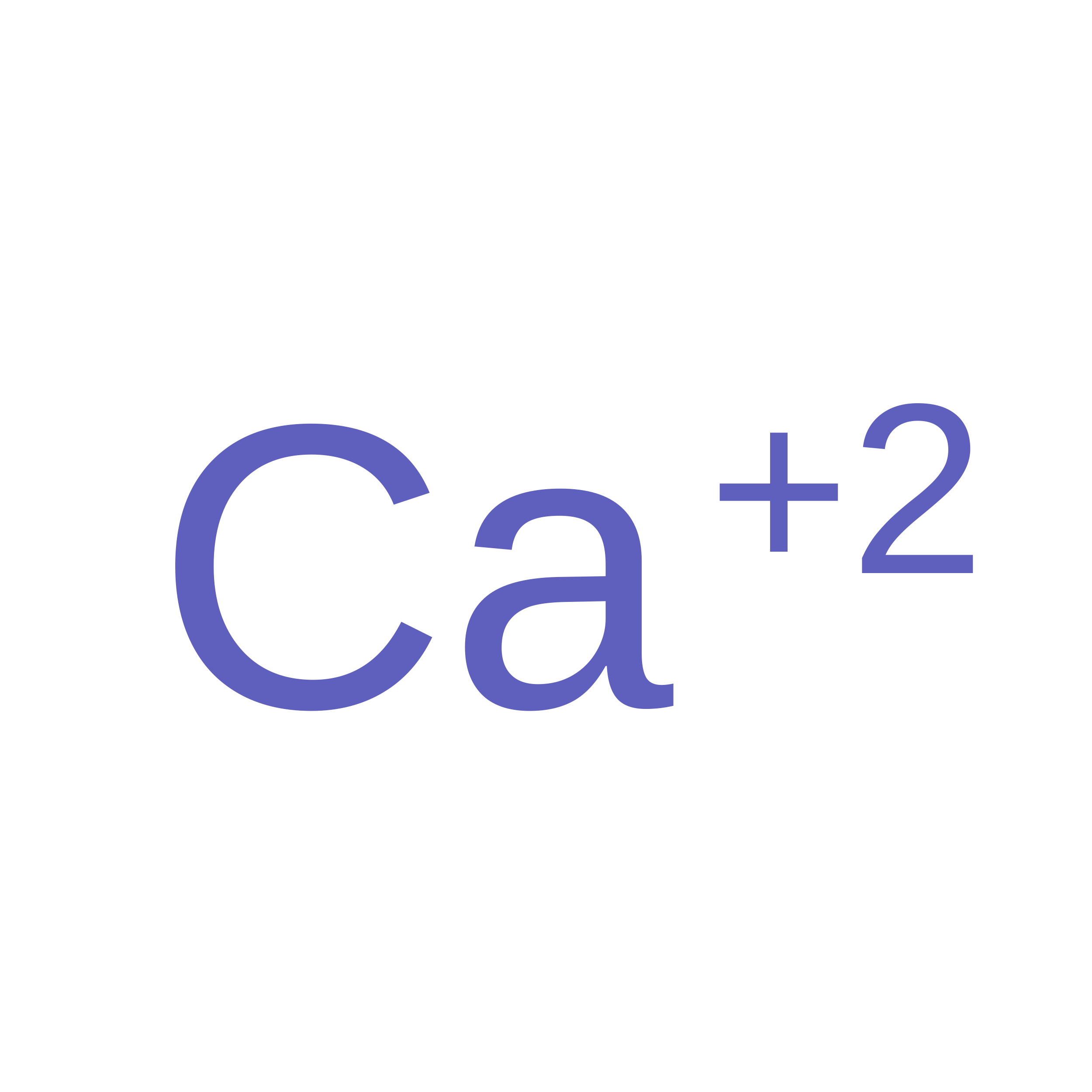
TRPM5 is a Ca 2+ -activated monovalent cation channel essential for taste perception, insulin secretion and gastrointestinal chemosensation. Canonical TRPM5 activation requires Ca 2+ binding at two distinct sites: an agonist site within the lower vestibule of the S1-S4 pocket in the transmembrane domain (Ca TMD ) and a modulatory site in the intracellular domain (Ca ICD ) that tunes voltage dependence and agonist sensitivity. Here we characterize CBTA as a noncalcium agonist that binds to the upper vestibule of the S1-S4 pocket, directly above Ca TMD . CBTA alone mimics the dual role of Ca TMD and Ca ICD , merging agonist activation with voltage modulation. CBTA also renders TRPM5 supersensitive to Ca 2+ , synergistically hyperactivating the channel even at near-resting Ca 2+ levels. We further demonstrate that the inhibitor triphenylphosphine oxide binds the same site but stabilizes a nonconductive state. These opposing effects reveal the upper S1-S4 pocket as a multifunctional regulatory hub integrating activation, inhibition and modulation in TRPM5.
- Department of Structural Biology, Van Andel Institute, Grand Rapids, MI, USA.
Organizational Affiliation: