Download Mendeley
Structural and functional insights into QueC-family protein in QatABCD anti-phage system.
Gao, Z., Li, F., Wang, H., Liu, X., Li, N., Xiong, W., Ma, W., Sun, D., Yan, D., Ma, Q., Xu, L., Zhang, Y.(2026) Nat Commun 17
- PubMed: 42834068 Search on PubMedSearch on PubMed Central
- DOI: https://doi.org/10.1038/s41467-026-77369-4
- Primary Citation Related Structures:
9WVJ, 9X6C - PubMed Abstract:
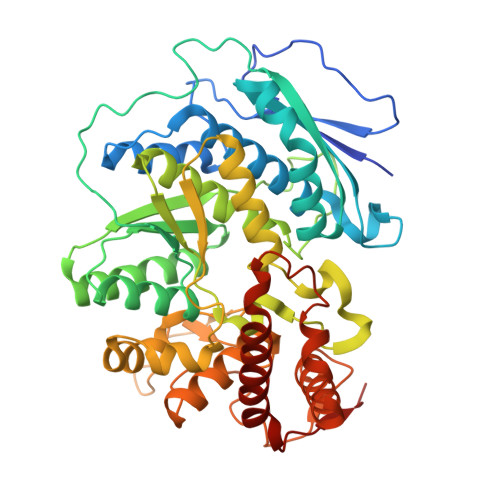
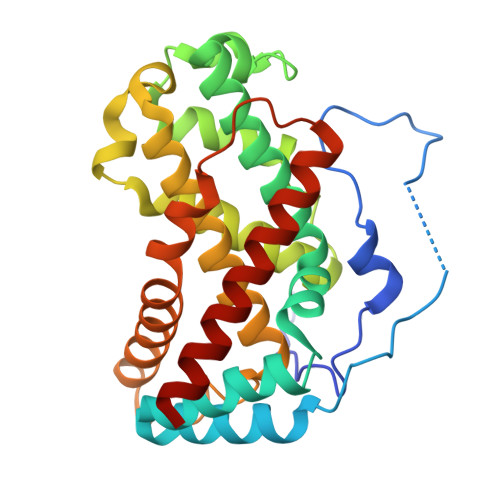
QatABCD is a widespread prokaryotic anti-phage defense system comprising four protein components, out of which QatC, a QueC-family protein is the signature component. QueC family proteins are nucleoside biosynthesis enzymes involved in the biosynthesis of queuosine, a 7-deazaguanine derivative. Recently, QueC-family proteins were shown to catalyze a deazaguanylation protein-nucleobase conjugation reaction in type IV CBASS antiphage defense. However, the mechanism of QatABCD, even the function of QatC in this system, remains unclear. Here, we demonstrate that QatBCD forms a complex in which QatD is highly flexible. Crystal structures of the QatBC complex in apo and ATP-bound form support a shared role for QueC-family proteins in targeting protein substrates for N-terminal modification as in type IV CBASS. We show that the QatB N-terminal loop, its binding with QatC and QatC catalytic site are essential for QatABCD defense in vivo, suggesting a modification might occur analogous to CBASS. These findings provide structural and functional insights into QueC-family protein in QatABCD system, suggesting the conserved mechanisms and critical roles of QueC-family in prokaryotic immunity.
- State Key Laboratory of Green Biomanufacturing, College of Life Science and Technology, Beijing University of Chemical Technology, Beijing, China.
Organizational Affiliation: