Download Mendeley
Dysregulation of Human ClpP Using Small Molecules with Piperazine-Based Scaffold for Diffuse Intrinsic Pontine Glioma Therapy Validated by Patient-Derived Tumor Organoids.
Miciaccia, M., Armenise, D., Baldelli, O.M., Liturri, A., Mammone, M., Graziano, G., Contino, M., Rizzo, F., Polosa, P.L., Bruni, F., Deligne, C., Broutier, L., Cavallaro, G., Fortuna, C.G., Tolomeo, A., Green, C., Bonifazi, A., Majaesic, E.M., Barghash, M.M., Josh Lee, N.P., Gratteri, C., Talarico, C., Filieri, S., Micalizzi, G., Donnarumma, D., Dugo, P., Mondello, L., Sardanelli, A.M., Houry, W.A., Nazarian, J., Ferorelli, S., Perrone, M.G., Scilimati, A.(2026) J Med Chem 69: 18386-18413
- PubMed: 42418817 Search on PubMed
- DOI: https://doi.org/10.1021/acs.jmedchem.6c00777
- Primary Citation Related Structures:
9Z3C - PubMed Abstract:
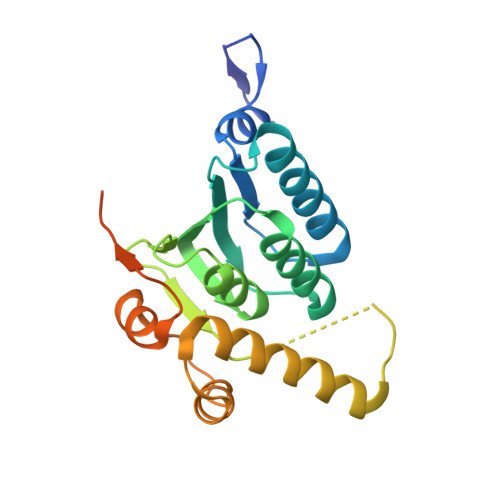
Diffuse intrinsic pontine glioma (DIPG) is a dismal pediatric brainstem tumor with a median survival of approximately 12 months and no curative treatments. ONC201, the most clinically characterized small-molecule, selectively activates human caseinolytic protease P (hClpP). Guided by X-ray structure of the hClpP:ONC201 complex, piperazine-based derivatives were designed and identified compound 26 (DA29) as a lead. Structural studies confirmed its binding to the enzyme hydrophobic allosteric pocket, a finding consistent with its strong proteolytic activation. Permeability under dynamic flow conditions suggested the ability of 26 (DA29) to cross cellular barriers, indicating potential brain tumor penetration. Mechanistically, 26 (DA29) activates hClpP, displaces hClpX from the hClpXP complex, induces mitochondrial dysfunction and ROS accumulation, and exerts cytotoxic effects in patient-derived DIPG cells and organoids. Notably, unlike ONC201, it does not interact with D2/D3 dopamine receptors. Overall, these findings establish a new structural framework for hClpP-targeted therapies and support further development of 26 (DA29) for DIPG treatment.
- Research Laboratory for Woman and Child Health, Department of Pharmacy - Pharmaceutical Sciences, University of Bari "Aldo Moro", 70125Bari, Italy.
Organizational Affiliation: