Download Mendeley
Structural and Mechanistic Studies of ADEPs Yield Potent Antibacterials and a Drug Formulation Strategy for Tuberculosis.
Fei, F., Burnside, C.M., Lun, S., Wee, D., Kaur, M., Anderson, H.R., McCarroll, M.N., Richardson, A.E., Neglia, S., Liu, H.M., Wang, X., Gupta, S., Rhee, K.Y., Wright, G.D., Bryson, B.D., Oehlers, S.H., Bishai, W.R., Schmitz, K.R., Sello, J.K.(2026) J Med Chem
- PubMed: 42727081 Search on PubMed
- DOI: https://doi.org/10.1021/acs.jmedchem.6c00893
- Primary Citation Related Structures:
11MI, 11OP, 11PA - PubMed Abstract:
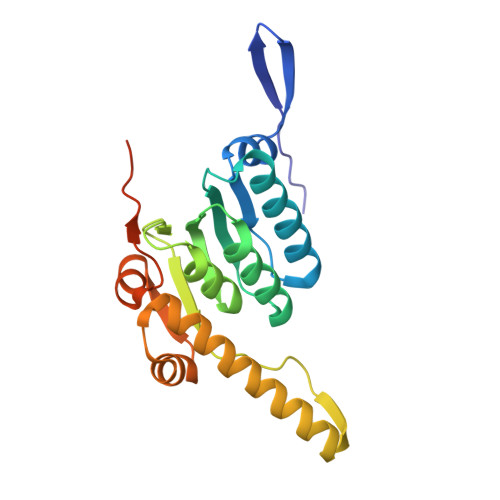
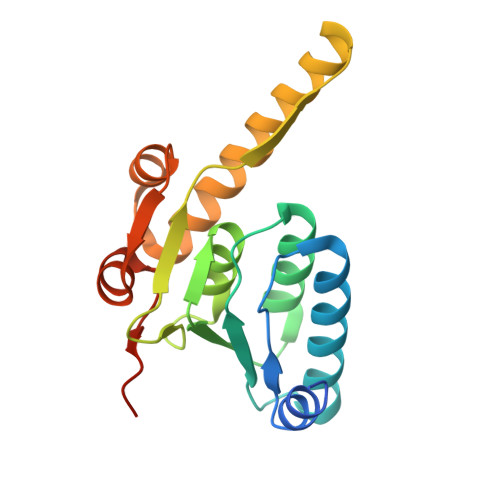
Acyldepsipeptides (ADEPs) are potent ClpP dysregulators that are active against a range of Gram-positive bacteria, but have limited potency against Mycobacterium tuberculosis (Mtb). To address potency, we employed a strategy of macrocycle rigidification and side-chain optimization enabled by a novel solid-phase peptide synthesis route. Among 35 compounds synthesized, ADEP 19 was as much as 12-fold more potent against Mtb and other bacteria than ADEP 4, the prototypical ADEP having efficacy in animal infection models. Biophysical, enzymatic, crystallographic, and microbiological studies showed that conformational restriction of both the macrocycle and side chain enhanced ClpP1P2 binding affinity and antibacterial potency. Our observation that ADEP 19 caused a reduction in intracellular ATP in Mtb suggested potential synergy of ADEPs with bedaquiline (BDQ), a tuberculosis drug that inhibits ATP synthesis. Checkerboard assays and experiments in a zebrafish TB model affirmed synergy between ADEP 19 and BDQ that could be leveraged to address BDQ-associated cardiotoxicity.
- Department of Pharmaceutical Chemistry, University of California, San Francisco, California94143, United States.
Organizational Affiliation: