3VWW | pdb_00003vww

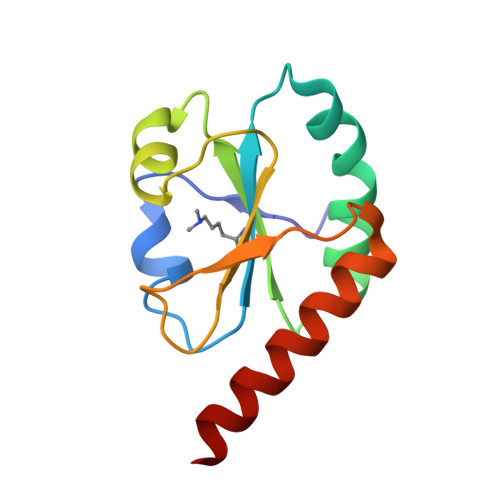
Crystal structure of a0-domain of P5 from H. sapiens


Experimental Data Snapshot

  • Method: X-RAY DIFFRACTION
  • Resolution: 1.93 Å
  • R-Value Free: 
    0.232 (Depositor), 0.224 (DCC) 
  • R-Value Work: 
    0.173 (Depositor), 0.169 (DCC) 
  • R-Value Observed: 
    0.176 (Depositor) 

wwPDB Validation 3D Report Full Report

Validation slider image for 3VWW

This is version 1.1 of the entry. See complete history

Literature

Synergistic cooperation of PDI family members in peroxiredoxin 4-driven oxidative protein folding

Sato, Y.Kojima, R.Okumura, M.Hagiwara, M.Masui, S.Maegawa, K.Saiki, M.Horibe, T.Suzuki, M.Inaba, K.

(2013) Sci Rep 3: 2456-2456

  • DOI: https://doi.org/10.1038/srep02456
  • Primary Citation Related Structures: 
    3VWU, 3VWV, 3VWW, 3W8J

  • PubMed Abstract: 

    The mammalian endoplasmic reticulum (ER) harbors disulfide bond-generating enzymes, including Ero1α and peroxiredoxin 4 (Prx4), and nearly 20 members of the protein disulfide isomerase family (PDIs), which together constitute a suitable environment for oxidative protein folding. Here, we clarified the Prx4 preferential recognition of two PDI family proteins, P5 and ERp46, and the mode of interaction between Prx4 and P5 thioredoxin domain. Detailed analyses of oxidative folding catalyzed by the reconstituted Prx4-PDIs pathways demonstrated that, while P5 and ERp46 are dedicated to rapid, but promiscuous, disulfide introduction, PDI is an efficient proofreader of non-native disulfides. Remarkably, the Prx4-dependent formation of native disulfide bonds was accelerated when PDI was combined with ERp46 or P5, suggesting that PDIs work synergistically to increase the rate and fidelity of oxidative protein folding. Thus, the mammalian ER seems to contain highly systematized oxidative networks for the efficient production of large quantities of secretory proteins.


  • Organizational Affiliation
    • 1] Division of Protein Chemistry, Medical Institute of Bioregulation, Kyushu University, 3-1-1 Maidashi, Higashi-ku, Fukuoka 812-8582, Japan [2].

Macromolecule Content 

  • Total Structure Weight: 25.9 kDa 
  • Atom Count: 2,004 
  • Modeled Residue Count: 232 
  • Deposited Residue Count: 232 
  • Unique protein chains: 1

Macromolecules

Find similar proteins by:|  3D Structure
Entity ID: 1
MoleculeChains  Sequence LengthOrganismDetailsImage
Protein disulfide-isomerase A6
A, B
116Homo sapiensMutation(s): 0 
Gene Names: PDIA6ERP5P5TXNDC7
EC: 5.3.4.1
UniProt & NIH Common Fund Data Resources
Find proteins for Q15084 (Homo sapiens)
Explore Q15084 
Go to UniProtKB:  Q15084
PHAROS:  Q15084
GTEx:  ENSG00000143870 
Entity Groups
Sequence Clusters30% Identity50% Identity70% Identity90% Identity95% Identity100% Identity
UniProt GroupQ15084
Sequence Annotations
Expand
Reference Sequence

Small Molecules

Modified Residues  1 Unique
IDChains TypeFormula2D DiagramParent
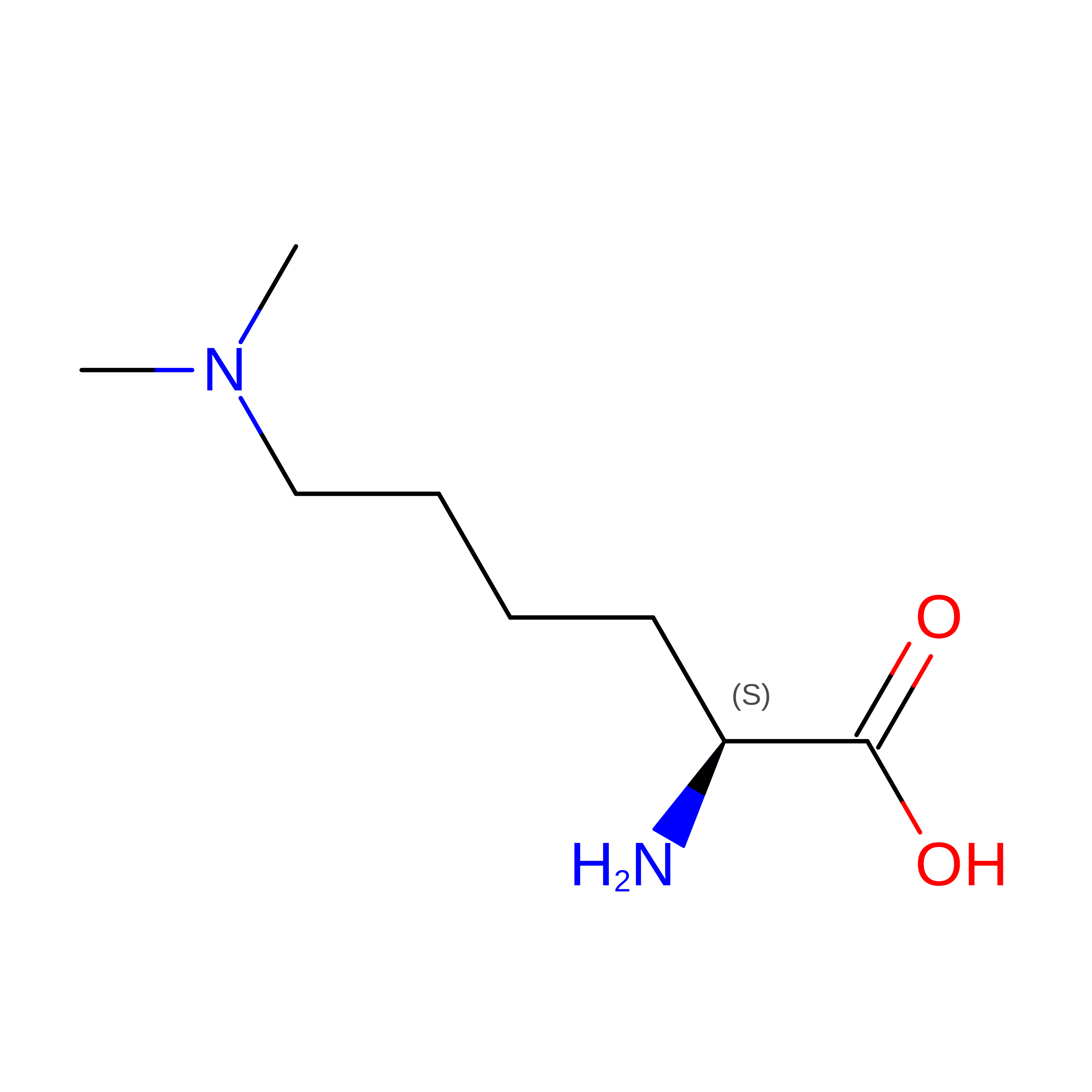
MLY
Query on MLY
A, B
L-PEPTIDE LINKINGC8 H18 N2 O2LYS

Experimental Data & Validation

Experimental Data

  • Method: X-RAY DIFFRACTION
  • Resolution: 1.93 Å
  • R-Value Free:  0.232 (Depositor), 0.224 (DCC) 
  • R-Value Work:  0.173 (Depositor), 0.169 (DCC) 
  • R-Value Observed: 0.176 (Depositor) 
Space Group: C 1 2 1
Unit Cell:
Length ( Å )Angle ( ˚ )
a = 90.461α = 90
b = 43.241β = 101.29
c = 61.245γ = 90
Software Package:
Software NamePurpose
BSSdata collection
PHASERphasing
PHENIXrefinement
HKL-2000data reduction
HKL-2000data scaling

Structure Validation

View Full Validation Report


Entry History 

Deposition Data

Revision History  (Full details and data files)

  • Version 1.0: 2013-09-04
    Type: Initial release
  • Version 1.1: 2025-03-26
    Changes: Data collection, Database references, Derived calculations, Structure summary