Download Mendeley
The SETD2 L1609P mutation found in leukemia disrupts methyltransferase activity and reduces histone H3K36 trimethylation.
Michail, C., Berthelet, J., Mechaly, A.E., Bui, L.C., Yang, H., Cai, D., Al Mahi, A., Xie, A., Bisio, V., Sirri, V., Dupret, J.M., Guidez, F., Xu, X., Joly, N., Regad, L., Viguier, M., Deshayes, F., Dulphy, N., Green, M.R., Haouz, A., Rodrigues Lima, F.(2026) J Biol Chem 302: 111259-111259
- PubMed: 41654133 Search on PubMedSearch on PubMed Central
- DOI: https://doi.org/10.1016/j.jbc.2026.111259
- Primary Citation Related Structures:
8RZU - PubMed Abstract:
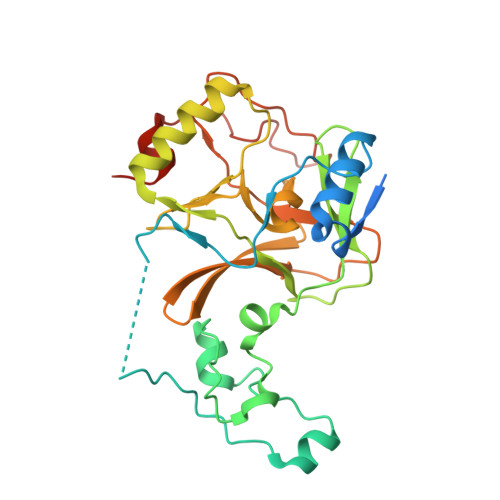
SET-domain containing protein 2 (SETD2) is the primary methyltransferase responsible for generating H3K36me3, an epigenetic mark that is essential for transcriptional regulation and chromatin integrity. SETD2 mutations are frequently observed in various cancers and tend to cluster within its catalytic SET domain. Despite the clinical relevance of SETD2 missense mutations in cancer, their biochemical and structural consequences remain insufficiently characterized. Here, we present the enzymatic and structural characterization of the SETD2 L1609P mutant enzyme identified in leukemia. The L1609 residue is located in the SET domain within a conserved hydrophobic pocket that is involved in substrate H3K36 recognition. Interestingly, site-directed mutagenesis of residues within this hydrophobic pocket leads to SETD2 enzyme variants with either decreased or increased H3K36me3 methyltransferase activity, suggesting that cancer mutations affecting the L1609 residue could result in a loss- or gain-of-function enzyme variant. Using molecular and cellular approaches, we show that the SETD2 L1609P mutant exhibits reduced H3K36 methyltransferase activity, decreased protein stability, and poor cellular expression. Consistently, the crystal structure of the SETD2 L1609P in complex with a H3K36M peptide shows remodeling of the active site. These findings support the pivotal role of SETD2 inactivation and subsequent disruption of H3K36me3 deposition in oncogenesis, particularly in hematologic malignancies. Our study provides the first mechanistic and three-dimensional protein structure information on how SETD2-associated cancer mutations can lead to altered H3K36 methyltransferase activity.
- Université Paris Cité, CNRS, Unité de Biologie Fonctionnelle et Adaptative, Paris, France.
Organizational Affiliation: